



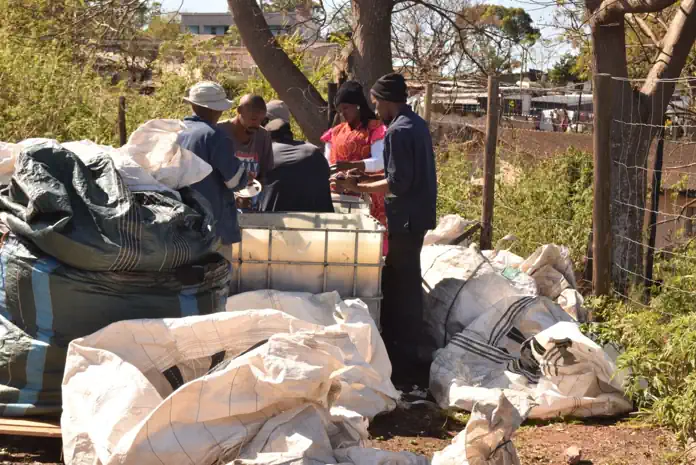
East Coast Recycling Partnership targets 13,000 tonnes of plastic recovery across KwaZulu-Natal
East Coast Recycling Partnership, a Green Corridors-managed initiative, targets 13,000 tonnes of plastic waste recovery across KwaZulu-Natal.
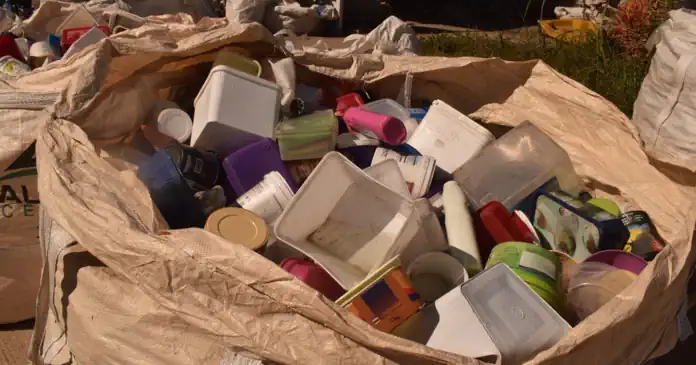
The East Coast Recycling Partnership, a project managed by Green Corridors NPC aims to recover 13,0000 tonnes of plastic waste from landfills, streets, open spaces and waterways across KwaZulu-Natal, over a 14-month period.
Set up in March 2025, the ECRP is a regional collaborative that aims to strengthen South Africa’s waste recovery value chain, focussing on the development of Buy Back Centre enterprises (BBCs), which are vital economic hubs in the recycling supply chain. In the month prior to the ECRP, the initial seven BBC partners collected 261 tonnes of plastics. By February 2026, the Partnership grew to eleven BBCs that collected 703 tons based on verified sales records. A combined 6,260 tonnes of plastic was recycled over the 12 months to February 2026- an average of 522 tonnes a month, doubling the output.
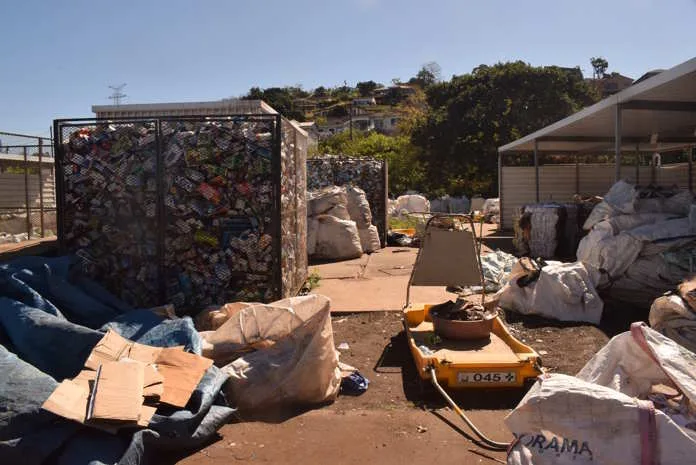
The programme supported more than 600 informal reclaimers who recovered more than 1,376 tonnes directly from landfills, streets and open spaces and invested R5.6 million into BBCs, sustaining more than 140 permanent jobs.
The next phase commenced in May 2026 with five BBCs from the first phase and a collective baseline of 308 tonnes of plastic recycled, 124 jobs and 680 reclaimer livelihoods supported. The ECRP has expanded its footprint covering Durban, Pietermaritzburg, Newcastle, Empangeni, Ladysmith, Eshowe, Scottburgh and Margate. Working with these 10 established BBCs and start-up mini-BBCs at three Durban informal settlements, the Programme targets over 13,000 tonnes of plastic recycled, 1950 informal reclaimers livelihoods impacted and 275 permanent jobs sustained, through a combined investment of over R11 million by June 2027.
“Our main sponsors the Alliance to End Plastic Waste (AEPW) and Unilever South Africa, working alongside Producer Responsibility Organisations and other plastics recycling industry partners, are enabling the ECRP to integrate the entire waste recovery chain,” explains Gary Cullen, ECRP Project Manager. “The Partnership links informal reclaimers directly to industry and establishes a unified system that is inclusive, scalable, data‑driven, and designed for sustainability.”
“Every tonne recovered through BBCs in the ECRP is tracked through a digital reporting system, giving funders, partners and municipalities verified data on volumes recovered, incomes generated and reclaimers paid,” says Cullen.
“A central focus of this phase is commercial sustainability,” says Cullen. “Our Enterprise and Supplier Development partner, Sigma International, has developed Business Support Plans with all thirteen BBCs and will provide mentorship over the next year, for which Corporate Enterprise Development funding is to be raised. These plans will guide the investments by Green Corridors and PRO partners into financial and data management, purchasing from reclaimers and infrastructure and equipment to grow and sustain their businesses.”
“This initiative demonstrates how collaboration across industry, communities, and local partners can build a recycling system that is both inclusive and commercially sustainable. The project reflects the Alliance’s strategy to drive system-level change by supporting solutions that address barriers to plastic circularity. By connecting informal reclaimers to the broader value chain, ECRP is not only diverting plastic from landfills and waterways, but also creating livelihoods, strengthening the circular economy in South Africa, and demonstrating the kind of locally grounded, commercially viable solutions needed to build more effective waste management systems,” says Kirchlin Simhadri, Senior Advisor, South Africa, Alliance to End Plastic Waste. “
“We believe we have a responsibility to invest in solutions that support the circular economy,” says Yase Godlo, Sustainability & Partnerships Manager – Unilever South Africa. “The ECRP model that links informal reclaimers directly to Buy Back Centres and industry, is exactly the kind of inclusive, data-driven system we need to scale if South Africa is going to build a truly circular economy. We are pleased to see the Partnership’s growth into this next phase, and remain committed to supporting the reclaimers and BBC enterprises who make this recovery work possible.”
The ECRP is seeking partnerships with corporates that are interested to engage with mentored waste recovery SMMEs through their Enterprise and Supplier Development programmes.
Organisations, industry players and investors interested in playing a part in this collaborative partnership building a viable circular economy for SMMEs in KwaZulu-Natal can contact the project directly on [email protected].

