



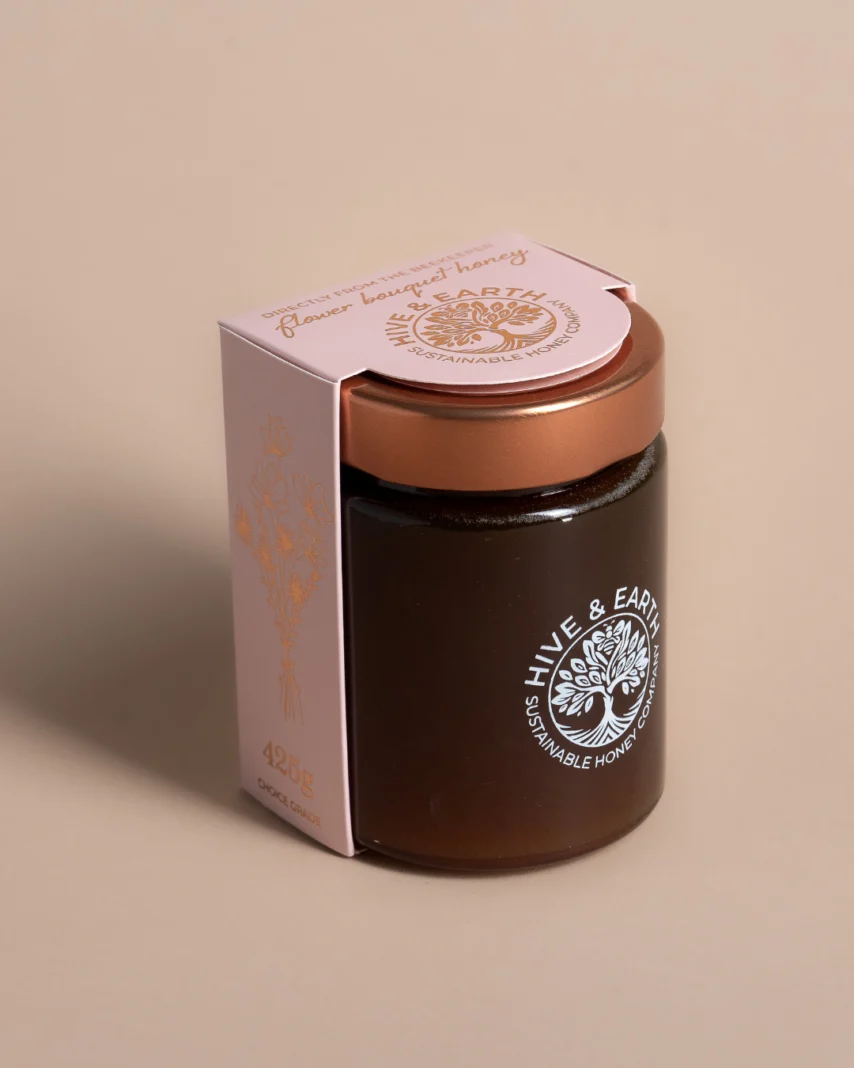
For decades, we have been sold a comfortable, generic idea of honey.
Permanently liquid, uniformly amber, and predictably sweet. But this version of a pantry staple is a fundamental misunderstanding of what the product actually is.
“True honey,” explains Liana van Rensburg, co-founder of Hive & Earth, “is not merely a sweetener. It is a living record of a landscape.”
It is a highly complex, seasonal, and botanically diverse product shaped entirely by geography, weather, and the colony’s delicate relationship with its environment. At Hive & Earth, redefining this relationship is the founders’ life’s work. With two decades of hands-on beekeeping experience, Danie Vorster has witnessed firsthand how true honey is crafted by nature and merely guided by the beekeeper.
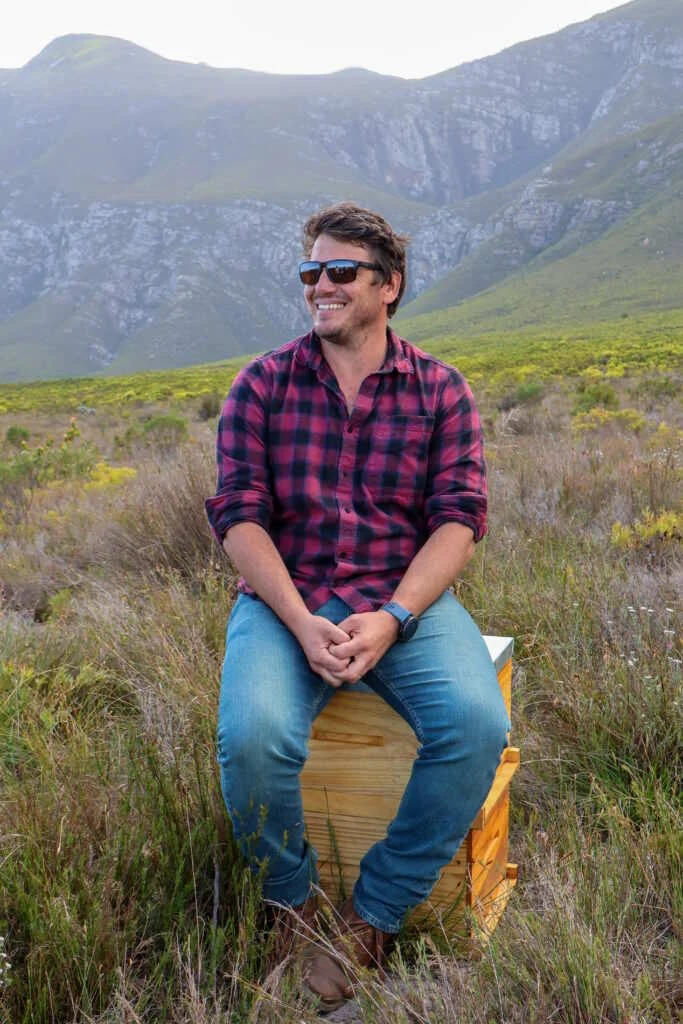
“We are not honey traders who buy and repackage bulk liquids,” Danie points out. “We are beekeepers, and our mission is to re-educate the palate on what genuine, unadulterated honey is meant to be.”
In the world of fine wine, the concept of terroir is well understood: the idea that soil, climate, and geography impart a unique characteristic to a vintage. Honey is no different. It is an edible map of a specific place in time.
A single jar of true honey represents thousands of individual flower visits. When bees forage in the Western Cape, they aren’t just visiting generic flowers; they are harvesting the nectar of the fynbos, one of the most botanically diverse vegetation types on earth. Fynbos honey isn’t a single-flower varietal, but rather a dynamic, shifting blend of whatever indigenous plants – erica, protea, restio, buchu, and wild rosemary – happen to be blooming in a specific valley at that exact moment.
Because nature never repeats a season exactly, honey harvested from the same apiary will taste different from one year to the next. The flavour is dictated by which plants bloomed strongest, how much rain fell, and the timing of the nectar flow.
For the founders, this natural variation is the ultimate mark of authenticity: “The beekeeper does not create the flavour; the bees and the landscape do.”
If honey is simply a reflection of nature, why does the beekeeper matter? The answer lies in the harvest’s fragility. From the moment it is removed from the hive, honey is susceptible to absorbing moisture, losing its delicate aromas to heat, and having its unique character blended away.
Liana notes that to protect the true nature of honey, you must oversee its entire journey. “Most commercial honey brands enter the process at the very end as packers,” she says. “Our ‘Bloom to Bottle’ philosophy means understanding the landscape before the bees even arrive.”
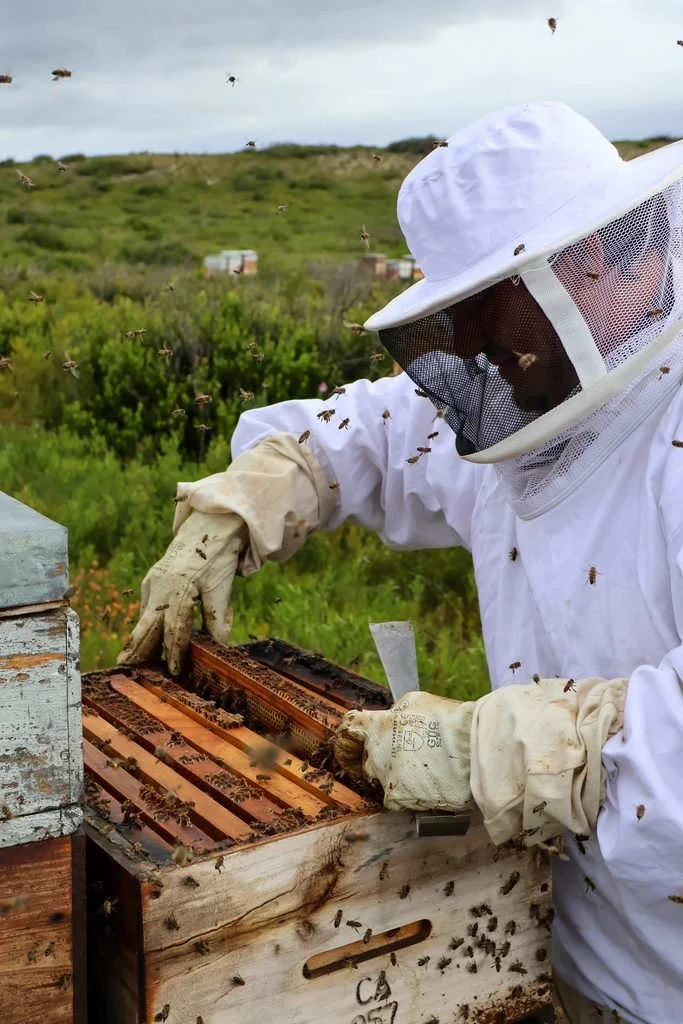
The team studies the soil, the expected flowering periods, and the carrying capacity of the biome. They monitor the nectar flow and wait until the bees have fully ripened and capped the honeycomb before harvesting.
Crucially, Hive & Earth extracts in small, highly traceable batches at their own facility. Where the industry standard is to blend different harvests to achieve a generic taste, they keep distinctive regional harvests separate. Every jar produced can be traced back to its harvest area, its apiary, and its extraction batch.
Perhaps the greatest misconception about honey is how it should look and behave on the shelf. The global industry standard is to heavily heat and micro-filter honey to prevent it from crystallising, keeping it endlessly liquid and clear.
Danie is quick to correct this expectation. “That process strips the honey of its natural pollen and degrades its complex flavour profile. Crystallisation is not a sign of spoiled or adulterated honey; it is a natural biological process that occurs in pure, raw honey.”
By refusing to micro-filter their honey, Hive & Earth retains its natural goodness, allowing its texture, viscosity, and natural crystallisation to behave exactly as nature intended.
When you open a jar of Hive & Earth honey, you are not just tasting a sweetener. You are experiencing the influence of a fleeting flowering season, the resilience of a colony, and the deep, guiding expertise of true beekeepers. From South Africa’s flowers directly to the table.
This is what honey really is.

