



JOHANNESBURG, Gauteng — Eskom tests green hydrogen and ammonia technologies in a landmark initiative designed to reshape South Africa’s energy future and fundamentally transform the national power grid. Inside the utility’s flagship research facility in Johannesburg, engineers are actively putting the country’s future energy mix to the test, marking a significant pivot for a state-owned power utility that has relied on coal for generations.
The country is currently seeking to leverage its abundant solar and wind resources to manufacture green hydrogen. This process involves converting clean, renewable electricity into a portable energy carrier specifically built to support heavy industry and international export.
An Eskom spokesperson emphasized the utility’s ambition to become a frontrunner in technology innovation. “There’s a lot of investments that has to be made on the research and development side,” the Eskom representative noted, adding that numerous projects are currently alive and active within the Johannesburg facility.
The potential of these innovations extends far beyond laboratory test benches. The overarching goal is to anchor entirely new manufacturing sectors and position South Africa competitively within a rapidly expanding global market.
Highlighting the economic benefits, an Eskom official stated that these emerging technologies present massive opportunities for industrialization. However, the spokesperson stressed the need for “very clear government policies” to scale these initiatives beyond one-off projects and properly orchestrate widespread industrialization, noting that the region boasts exceptional renewable resources.
The transition, however, requires a delicate balancing act. Coal continues to anchor South Africa’s national grid, even as international and domestic pressure mounts to drastically slash carbon emissions. Rather than immediately decommissioning these legacy assets, Eskom is concurrently testing abatement technologies designed to lower emissions from its active coal fleet.
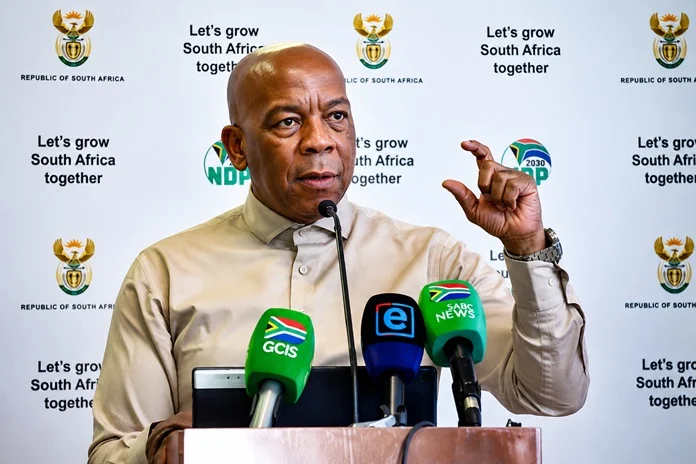
Addressing this dual approach, Minister of Electricity and Energy, Dr. Kgosientsho Ramokgopa explained that the positive outcome of these abatement tests means the country can continue to utilize its natural coal endowment within a broader energy mix. “We are able to meet our obligations with regards to emission standards” while successfully protecting the health and lives of communities in the immediate footprint of the coal-fired power stations, Dr. Ramokgopa added.
As South Africa builds out its hydrogen infrastructure, it faces stiff competition on the world stage. Global competitors, led by China, are rapidly scaling production to secure market dominance. For Eskom, this initiative is far more than an academic exercise. The ultimate objective is to turn laboratory testing into real-world commercial infrastructure, drive foreign direct investment, create vital industrial jobs, and firmly secure South Africa’s place in the post-fossil fuel economy.

