



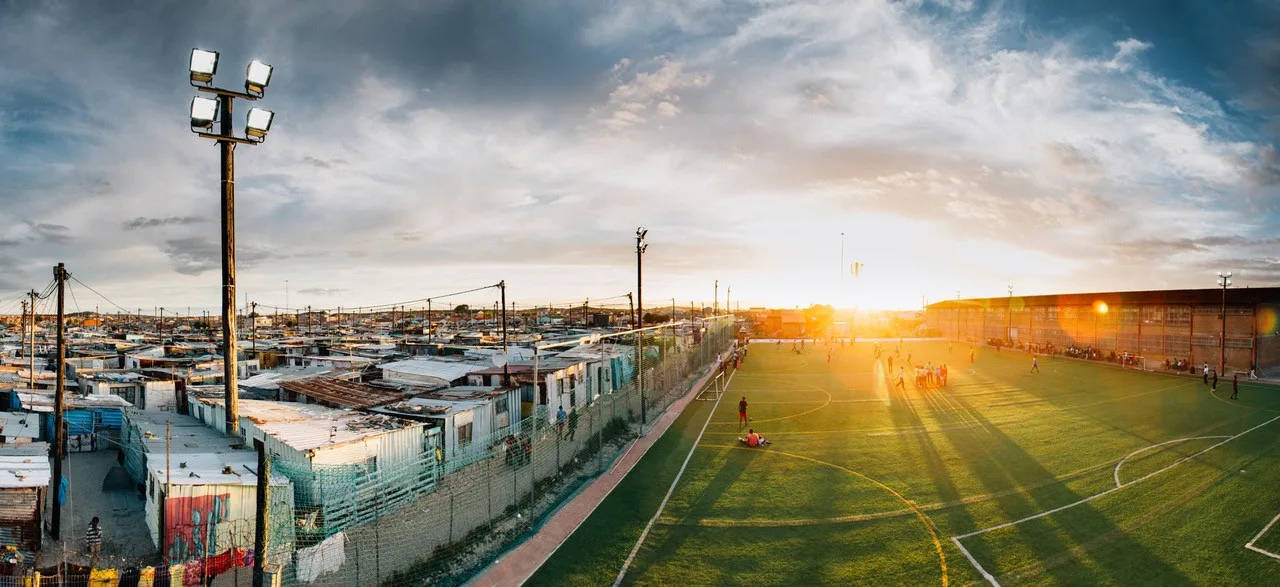
Amid widespread concern about youth unemployment in South Africa, Safe-Hub is creating pathways to opportunity, one community at a time.
Johannesburg, 23 June 2026: According to the latest figures from Stats SA, approximately 3,9 million young people aged 15-24 are not in employment, education or training. That’s 37.6% (more than a third) of South Africa’s youth. For young women, the percentage sits even higher, at 39.2%.
Twenty-one-year-old Anelisa is not part of that statistic. She is currently enrolled as a student at the University of Cape Town, and credits that fact to Safe-Hub, a social enterprise that works with local partners to create safe spaces where young people from under-resourced communities can find the care, resources and opportunities they need to thrive. “The support and opportunities I accessed through Safe-Hub contributed to my educational journey and motivated me to pursue higher education,” says Anelisa, who hails from Gugulethu, an area of Cape Town plagued by crime.
What is a Safe-Hub?
A Safe-Hub is a place where young people are safe, supported and able to grow. From childhood to career, it brings together sport, learning, physical and mental health and real access to build bright futures for themselves and their families, all in one place within their own community.
In 2007, Safe-Hub Founder, Florian Zech, had just finished high school and spent a year living and working in Khayelitsha. “What I saw were young people full of talent and energy, but without access to a safe, nurturing, and enabling space to pursue their goals,” recalls Zech. “On the street, they were too often exposed to everything you would want to keep a child away from.”
Zech started organising football tournaments that anyone could join. They grew fast. Soon they needed proper organisation and a place of their own. That became the first Safe-Hub, an initiative developed for youth by youth.
Sport was and continues to be a key focus, with Safe-Hub developing state-of-the-art facilities with communities across SA. From there, the model has expanded to include more services and programmes for a wider range of young people. Under the vision “Every child. Every day. Every moment,” Safe-Hub now offers early childhood development care, afterschool recreation and education programmes, career readiness, digital skills, entrepreneurship courses, as well as placement support. It also offers age-appropriate health and wellbeing services, giving young people direct access to healthcare within their own communities.
“A Safe-Hub is more than just a world-class youth facility with a field and a building. It supports a young person from early childhood right through to starting their career and earning a living, as they start to build a future and move forward in life. Furthermore, it increasingly funds itself, with social businesses on site that stimulate and grow local economies, creating more local jobs and supply and value chain opportunities for local entrepreneurs. This creates a more fertile environment for opportunities, while re-investing into the community, rather than relying on outside funding indefinitely,” says Zech.
Real lives, real impact
For Zech, one of the most rewarding aspects of Safe-Hub is seeing the compounding effect that it has on young people’s lives. “When a young person has a reliable, safe place and holistic support they can count on, over time that same place will open the way into training, a first job and pathways into a career, or a business of their own. The social return on that has been measured (in an external study) up to 900%,” says Zech. “Many first came to us as children and are now running businesses, coaching the next group, or in steady work that no one in their family had before.”
Anelisa, who attended the Gugulethu Safe-Hub between 2022 and 2024, speaks enthusiastically about the impact of the experience. “Through Safe-Hub, I was also able to participate in a variety of activities that contributed to my personal development, including sports programmes, hikes, movie days, game days, and community events during public holidays. These activities helped me build friendships, improve my communication skills, and become more confident when interacting with others.”
A highlight for her was taking part in a programme where she worked with a team of young people to plan and organise events and activities, and learning about social issues, such as LGBTQI+ inclusion, respect, diversity, and human rights.
Meanwhile, having access to free Wi-Fi and study spaces helped Anelisa complete schoolwork, submit job and university applications, and ultimately get accepted into UCT.
Uplifting entire communities
Many Safe-Hub alumnae have gone on to run successful businesses or find employment. Mihle is one of them. “Last year I worked at Safe-Hub as a Playmaker and it was one of the most valuable experiences of my journey,” she says. “The Playmaker Programme taught me to step out of my comfort zone, take initiative, and believe in my potential. After completing the programme, I started my own kota business and later joined a network marketing company.”
“When one young person’s path changes, the community around them feels it too,” says Zech. “For example, we have placed more than 2 000 young people into work in just two years through our partnership with the Business Process Outsourcing Sector and opened more than 3 000 local job opportunities, most of them for young women. We have trained over 1 000 township businesses.”
Sharing the impact
“For some time, Safe-Hub was one place in one community,” says Zech. “It was proving a simple idea: that a safe space with a holistic and long-term support offering under one roof could change a young person’s life,” says Zech.
Once Safe-Hub had irrefutable evidence that the model worked, it was time to take what had been developed in Khayelitsha to more communities. Today there are 20 Safe-Hubs; 16 of which are in South Africa and the rest in Germany, the United States, India and Côte d’Ivoire. A South African designed youth development solution, applied to different contexts all around the globe.
In every community, the model is developed with the community to contextually meet local needs and opportunities. And it has worked. Safe-Hub has recorded more than one million check-ins within the last two years alone; that’s more than a million times a young person chose to be somewhere safe. “Safe-Hub has been tested in some of the hardest places in the country and what we now know is that it works and it stays,” says Zech. “A Safe-Hub is developed by and is part of a community, and it stays with a young person through every stage, from the early years to a first job.”
A key part of that is building through lasting partnerships. While Safe-Hub accepts financial donations, the team prefers to enter into long-term partnerships with like-minded organisations and companies that share their values of dignity, inclusion, collaboration and long-term impact. “Creating sustainable social change takes time. Long-term partnerships allow us to build trust, innovate together, and create measurable impact over many years,” says Zech.
He adds that the team carefully considers a company’s practices, reputation and broader social impact before entering into a partnership.
The team’s ambition is to build enough partnerships to take Safe-Hub to every community that needs one so that every young person can reach their own potential.
“We know that is a big vision,” says Zech. “But after almost twenty years, we also know it is possible, because we have watched it happen. A more equitable world is not just something we hope for. We are already helping to build it.”
About Safe-Hub:
Safe-Hub is an established, international social enterprise that works with local partners to create safe, inclusive spaces where young people from under-resourced communities can access the care, resources and opportunities they need to thrive. Through holistic, multi-purpose hubs, Safe-Hub supports young people across their full development journey – from early childhood through to economic participation. Its award-winning sustainability model, developed by AMANDLA Social Enterprises, is rooted in catalysing communities to support themselves by building local leadership, skills and systems that enable long-term impact. Safe-Hub is committed to taking collective action to overcome global inequality. By working together, we rise together to realise our vision for an equal world.
Safe-Hub is currently active in South Africa, Germany, the United States, India and Côte d’Ivoire.
Visit: https://safe-hub.org/
Facebook: Safe-Hub Global
Instagram: safe_hub_global

