



- The study found that landslides triggered by extreme rainfall in November 2025 likely killed about 7% of the estimated global population of Tapanuli orangutans.
- Researchers warned that without swift intervention, the species could face increasingly frequent climate-driven disasters in the future.
- The study only quantified direct mortality from landslides and did not account for deaths caused by canopy collapse outside mapped landslide areas, starvation, injuries or longer-term ecological consequences.
- In a statement to Mongabay, the forest ministry said it “appreciates and is taking into consideration” scientific studies on the Tapanuli orangutan, including research estimating the impacts of floods and landslides on the species.
JAKARTA — Climate change has become a direct threat to the survival of the world’s rarest great ape, according to scientists, after landslides triggered by an unusually intense storm killed an estimated 58 critically endangered Tapanuli orangutans (Pongo tapanuliensis) in Indonesia’s Batang Toru ecosystem.
The estimate comes from a new study published in Current Biology, whose authors say the findings may represent one of the first examples of climate change immediately threatening the survival of an entire species.
The researchers found that landslides triggered by extreme rainfall associated with Cyclone Senyar in November 2025 likely killed about 7% of the estimated global population of Tapanuli orangutans, which number fewer than 800 individuals and are concentrated in the Batang Toru landscape in North Sumatra.
After analyzing satellite imagery, the researchers identified more than 50,000 individual landslide scars and estimated that about 8,300 hectares (20,500 acres) of forest in the western block of Batang Toru were affected by the disaster.
The western block is considered the species’ most important stronghold, hosting more than 500 orangutans and one of the three known population clusters within the Batang Toru landscape.
The researchers believe most orangutans caught in the landslides died rather than being displaced because of the violence and speed of the event.
While the landslides were relatively shallow, they moved extremely rapidly and transformed into channelized debris flows. With little or no warning, orangutans and other wildlife likely had little chance of escaping and may have been buried, drowned or fatally injured by falling trees.
“If you get caught as an orangutan or any wildlife, and it’s a very steep, dissected area, so if anything comes down, it comes down at great speeds, survival chances are going to be very minimal,” said co-author of the study Erik Meijaard, managing director of Borneo Futures.

The researchers described the event as a major demographic shock for a species already facing a precarious future.
The estimated death toll represents about 11% of the orangutans living in the western block.
The concern is compounded by the species’ slow reproductive rate. Female orangutans produce offspring only once every six to nine years, and previous studies have shown that sustained annual losses exceeding 1% could eventually drive the species to extinction.
“That’s why it’s of such a concern, because it’s an added event with extra mortality on top of mortality that’s already so high that they’re under threat already,” said co-author of the study Serge Wich, a primatologist at Liverpool John Moores University.
Researchers warned that without swift intervention, the species could face increasingly frequent climate-driven disasters in the future.

Climate change and biodiversity loss collide
The scientists largely attribute the landslides to climate change.
Using climate attribution analysis, they concluded that human-induced climate change increased the intensity of Cyclone Senyar’s rainfall by between 9% and 50%, on top of natural climate drivers such as La Niña and a negative Indian Ocean Dipole, referring to the temperature of the sea surface.
The findings also challenge conventional assumptions about what drives environmental disasters in Batang Toru.
Unlike many landslide events elsewhere in Indonesia, most of the affected areas were primary forests rather than previously logged landscapes.
The study found that once rainfall surpasses a critical threshold, even intact old-growth forests cannot prevent slopes from collapsing.
For the researchers, this represents an important shift in how conservation threats are understood.
“This just shows how closely linked the climate crisis and biodiversity loss [are], and that we cannot stop the latter if we’re not addressing the former,” said co-author of the study Friederike Otto, a professor of climate science at Imperial College London.
While climate phenomena such as La Niña and the Indian Ocean Dipole fluctuate naturally, she said human-driven warming will continue to intensify extreme weather events as long as fossil fuel emissions continue.
Otto said the Batang Toru rainfall event is now roughly a one-in-70-year event in today’s climate. Without climate change, it would have been much rarer.

The toll may be greater than 58 orangutans
Researchers said the true impact may be larger than the estimated 58 deaths.
The study only quantified direct mortality from landslides and did not account for deaths caused by canopy collapse outside mapped landslide areas, starvation, injuries or longer-term ecological consequences.
The landslides stripped away above-ground vegetation and soil, leaving affected areas with almost no food resources for orangutans.
Researchers estimate it could take five to 10 years before pioneer vegetation sufficiently recovers.
The surviving orangutans may also face additional pressures.
Canopy destruction could force them to travel farther to find food, expend more energy and potentially experience lower reproductive success, extending the impacts well beyond the initial death toll.
Despite the estimate of 58 deaths, only one orangutan carcass has been publicly documented so far. The animal was reportedly found drowned and showed severe abrasions.

Calls for stronger protection
The researchers are urging Indonesian authorities and other stakeholders to act quickly to strengthen protections for Batang Toru.
One recommendation is to designate the Batang Toru ecosystem as a National Strategic Area, or Kawasan Strategis Nasional (KSN), which would strengthen legal protections and formally recognize the landscape as both a critical wildlife habitat and an important climate buffer.
The researchers also called for expanding orangutan habitat beyond its current range to improve the species’ resilience to future climate shocks.
“The only future I could see for the species is a significant expansion of the area,” Meijaard said during a press briefing.
Another priority is reconnecting fragmented habitats.
The Tapanuli orangutan currently survives in three isolated populations — the west, east and south blocks of Batang Toru.
“The east and the west block area are mainly disconnected because of a major road that goes in between those blocks now,” Wich said. “There is an opportunity to build wildlife bridges over that road. It’s not a super wide road, so that is something that could be done.”
Restoring habitat connectivity would increase opportunities for dispersal and genetic exchange, he said.
Wich also called for a landscape-wide conservation action plan that all stakeholders could support and attract international funding.
Meijaard said the international community bears some responsibility for financing these efforts because climate change is a global problem.

Industrial pressures remain
The scientists said climate change is not the only threat facing the species.
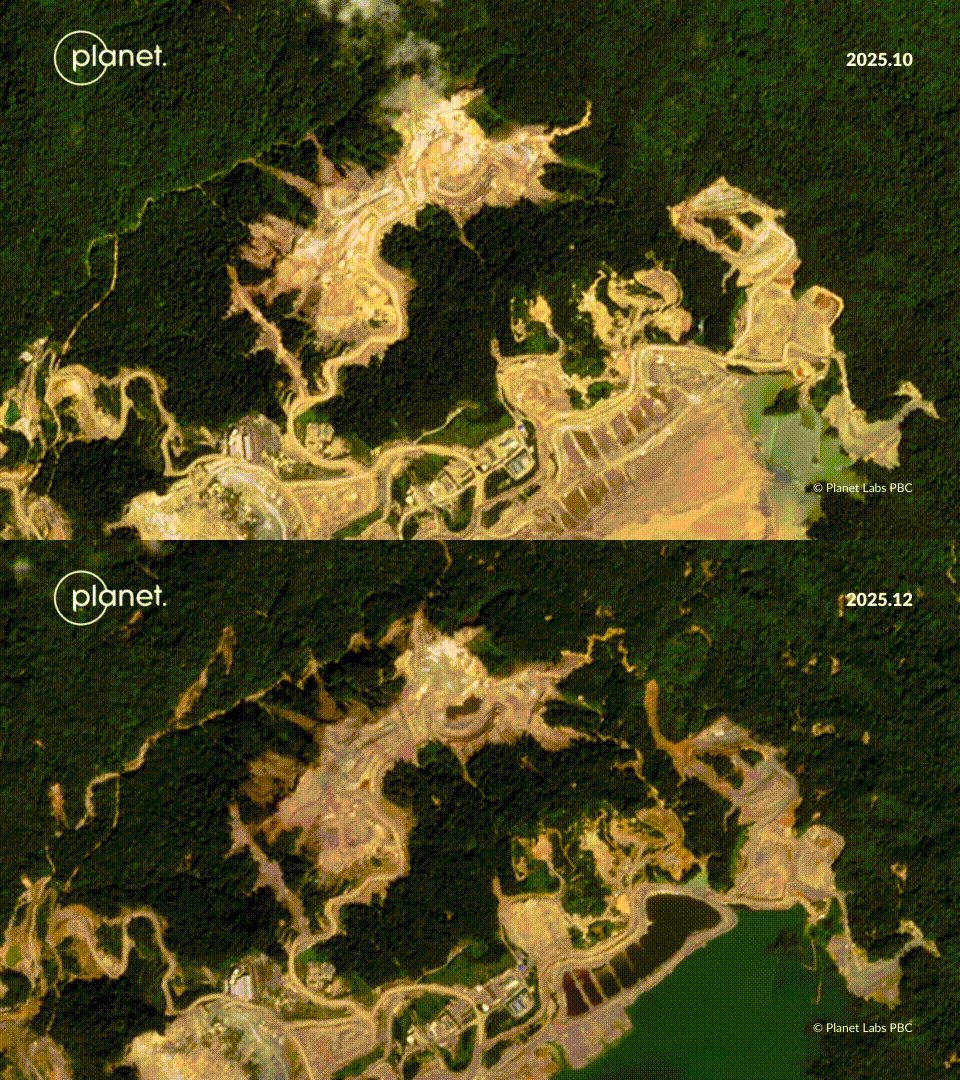
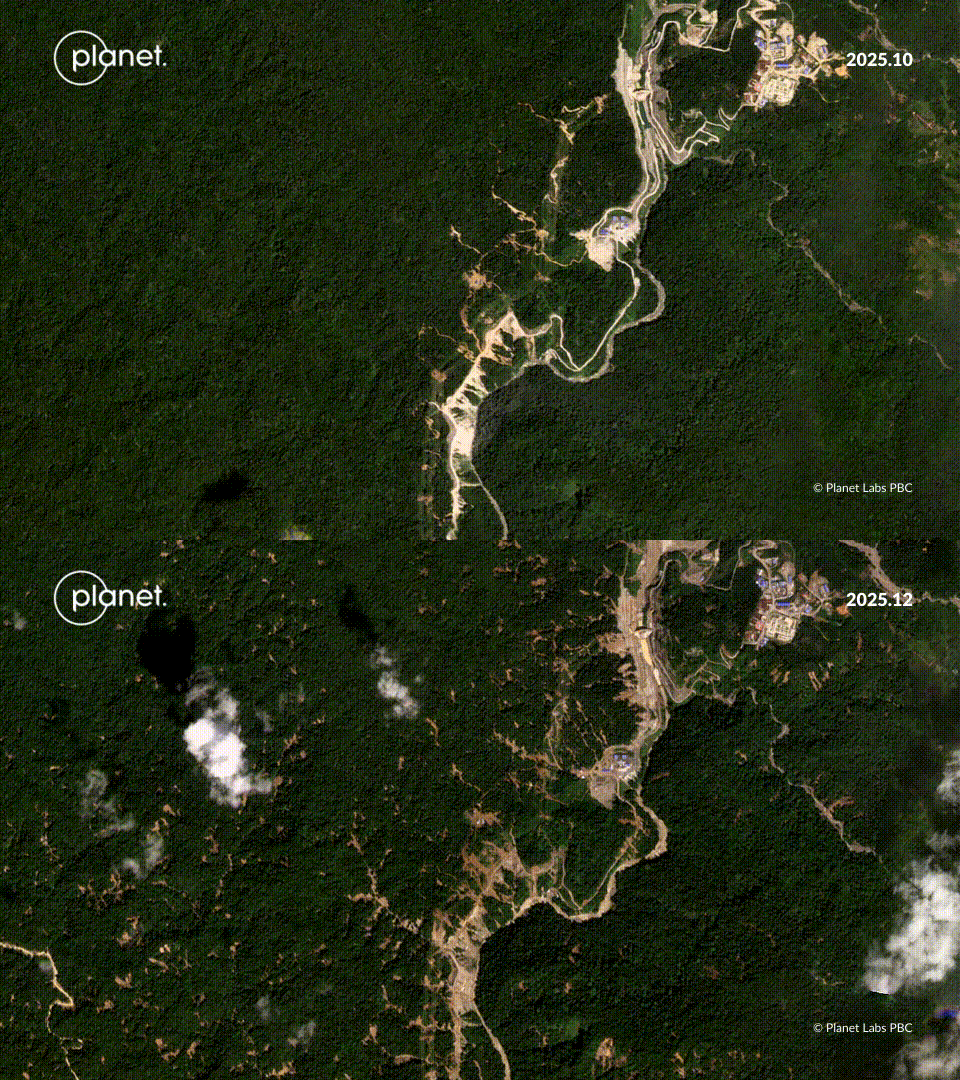
Batang Toru, which remains the main stronghold for Tapanuli orangutans, is also under pressure from industrial developments, including a hydropower project and the Martabe gold mine; both of which have required forest clearing within the landscape.
Both projects were temporarily halted after the November 2025 disaster while environmental reviews were conducted.
However, the Environment Ministry approved the resumption of Martabe’s operations in March 2026 after previously freezing the mine’s environmental permit.
At the time, mine operator PT Agincourt Resources said it was preparing to restart operations while coordinating with government agencies.
Later, Agincourt’s parent company, United Tractors, said operations at the Martabe mine would resume in mid-May.
However, the mine’s current operational status remains unclear.
In its latest statement to Mongabay, Agincourt said it continues to coordinate with stakeholders before operations can “return to normal,” but did not explicitly say whether mining activities have fully resumed.
Amanda Hurowitz, forest commodities lead at U.S.-based advocacy group Mighty Earth, criticized the government’s decision to allow the gold mine and hydropower project to resume operations.
“The Indonesian government’s decision to allow the Martabe mine and Batang Toru dam to resume operations makes no sense and completely contradicts President Prabowo [Subianto]’s stated goal to end deforestation and protect nature,” she said in a statement.
Co-author of the study David Gaveau, founder of technology consultancy TheTreeMap, said the government’s decision to allow Martabe to resume operating after environmental reviews was unsurprising given the mine’s economic importance.
Still, Meijaard said industrial projects should not be allowed to expand beyond their existing footprints.
“The footprint is there, the footprint is what it is, I wouldn’t like to see that expand beyond where it is now, because that’s indeed going to create more pressure on the orangutan,” he said.
In November 2025, Jardine Matheson, the parent company of Indonesian conglomerate Astra International, which indirectly controls Agincourt, announced plans to proceed with a new 50-hectare (124-acre) mining pit north of the existing operation.
The expansion would require additional forest clearing.
Environmental groups have called on Jardine Matheson and Agincourt to halt any further expansion in Batang Toru. An online petition calling for the company to stop future expansion projects has gathered more than 150,000 signatures.
Wich said industrial operators should be part of the solution.
“The gold mine is at the moment actively engaging with organizations involving conserving orangutans. The hydro project is not as far as I know,” he said.
“And that is a problem. We can only save these species if all the companies and NGOs and governments and scientists come together and work together to hammer out a good plan to do this.”
Government response and the road ahead
Co-author of the study Panut Hadisiswoyo, founder of the Orangutan Information Centre, said he sees no concrete plans yet to expand orangutan habitat or rehabilitate areas damaged by the landslides.
He said he had met with forestry ministry officials to discuss the findings, but they questioned the conclusions and sought clarification from the researchers.
In a statement to Mongabay, the ministry said it “appreciates and is taking into consideration” scientific studies on the Tapanuli orangutan, including research estimating the impacts of floods and landslides on the species.
The ministry also acknowledged climate change as a growing challenge, saying increasing extreme weather events such as floods and landslides underscore the importance of protecting forest cover and ecosystems.
“Going forward, the Ministry of Forestry encourages stronger collaboration among all parties to rehabilitate and restore degraded habitats, while also safeguarding remaining intact forests and natural habitats so that they continue to provide safe homes for Indonesia’s wildlife,” the ministry told Mongabay. “We believe that safeguarding the Tapanuli orangutan is not solely the government’s responsibility, but also requires broad public support.”
However, it did not directly address the study’s estimate that 58 orangutans may have died.
Despite the challenges, Meijaard said he remains optimistic.
“I’m absolutely 100% convinced that if the willingness is there, the funding is there, and the political support is there, we can save the Tapanuli orangutan,” he said.
“Otherwise, I wouldn’t be doing this. It would be pretty pointless.”
The solutions, he said, already exist.
“I think we can avoid extinction, unless there’s a major disease outbreak or something beyond our control. But whether it will realistically get done is a different question.”
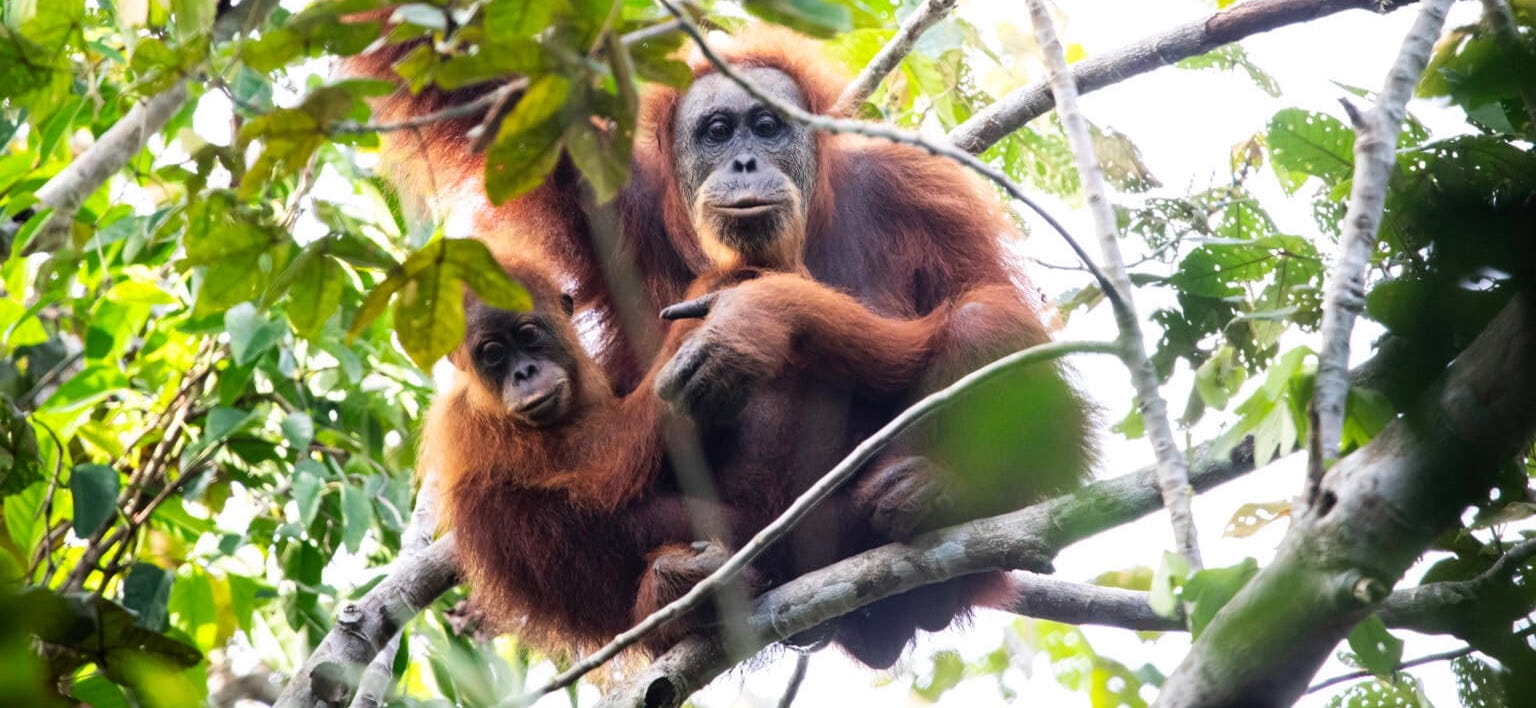
Banner image: A previously unknown home of Tapanuli orangutans has been discovered in a peat swamp forest in North Sumatra. Image by Junaidi Hanafiah/Mongabay-Indonesia.
Citations
Meijaard, E., Wafiy, M., Ni’Mattulah, S., Dennis, R., Hadisiswoyo, P., Sheil, D., … & Wich, S. (2026). Extreme rainfall further endangers the world’s rarest great ape. Current Biology. doi: 10.1016/j.cub.2026.05.029
FEEDBACK: Use this form to send a message to the author of this post. If you want to post a public comment, you can do that at the bottom of the page.
Credits

This story first appeared on Mongabay
This article is licensed under a Creative Commons Attribution-NoDerivatives 4.0 International License.
You may republish this article, so long as you credit the authors and Mongabay, and do not change the text. Please include a link back to the original article.

