



Rising delivery demands are exposing the limits of manual proof-of-delivery systems and forcing a rethink of accountability.
As delivery expectations continue to rise, the last mile has become the defining moment of truth in the logistics value chain.
Industry research supports this shift. A 2025 last-mile delivery report by Clickpost notes that the final leg of delivery now accounts for more than half of total shipping costs, while consumer surveys consistently show that delivery experience directly influences brand loyalty. In that context, inefficiencies at the point of delivery are no longer minor operational issues but strategic risks.
For many logistics providers, the move toward digitisation has not been driven by trends, but rather by operational necessity. While many people hanker for the good ‘ol days of physical documents and paperwork, the reality is that it creates a great deal of admin for logistics companies.
Paper-based processes, for example, required extensive preparation each morning before drivers could be dispatched, notes Ryan Gaines, CEO of City Logistics. Not only that, but there was a greater risk of things going wrong, as documentation moved with every consignment, increasing the risk of lost documents and incomplete records.
Manual capture at the point of delivery was also slowing drivers down, with end-of-day debriefings often uncovering inaccuracies that were difficult to put right after the fact. The cumulative effect was time lost, visibility compromised, and accountability diluted.
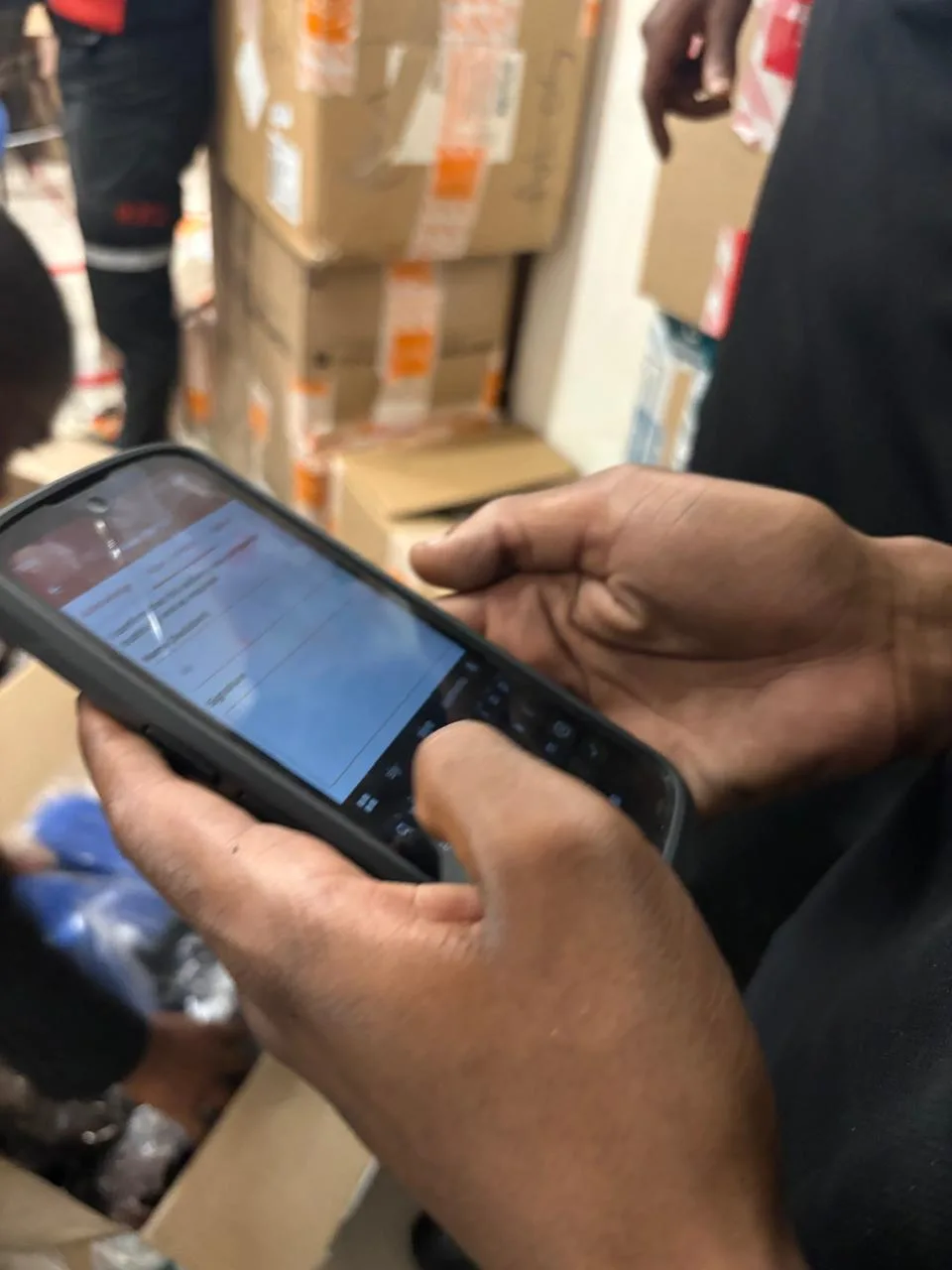
Gaines notes that City Logistics’ transition to electronic proof of delivery, or ePOD, fundamentally reshaped how responsibility is shared across the delivery ecosystem. The digital workflow ensures that drivers complete each transaction accurately on their OnRoute devices before a delivery can be finalised. At the same time, customers acknowledge receipt directly through signature-on-glass functionality.
Once a delivery has been completed, the ePOD is automatically issued via email to the delivery point, removing uncertainty and reducing follow-up queries. Any exceptions are captured immediately on the device and flagged in real time, ensuring that deviations are documented and visible without delay.
The most valuable gains have come not just from eliminating paper, but from the structured data captured at delivery. Logistics companies are making use of precise scanning times, creating reliable time stamps for each transaction. Endorsements, for example, are categorised and logged directly on the device, allowing exception types to be analysed and addressed systematically.
Customers can also provide free-text feedback at the point of delivery, providing qualitative insight that was previously inconsistent or lost entirely in the manual processes. Together, these data points have strengthened performance management and provided timestamped evidence—useful information to have when resolving delivery disputes.
Features such as photo verification and multi-signature handovers have further enhanced transparency. “We’re not suggesting that these tools eliminate errors or redeliveries, but they do improve visibility and validation significantly,” commented Gaines. “Photographic confirmation provides proof aligned to each transaction, and requiring two signatures on every delivery strengthens our chain-of-custody controls.”
Balancing speed and flexibility with compliance is key to achieving a successful digital workflow. Audit requirements that are built into the system ensure that mandatory controls are met at the point of delivery. Speed and operational flexibility were treated as primary considerations when defining the process, rather than secondary features. This allows drivers to move efficiently while maintaining governance standards.
Gaines notes that real-time visibility has reshaped exception management for his company. “Operations teams no longer have to wait for drivers to return to the depot to uncover any issues. Delivery information is visible instantly, enabling faster communication with customers and shorter turnaround times when resolving failed deliveries or discrepancies. We can intervene earlier and manage service levels more proactively,” he said.
The advent of mobile delegation in logistics has also made life easier for operational teams. When routes change or drivers are reassigned, deliveries can be transferred without fuss, allowing for swift execution and sustained network momentum. Being flexible is no longer tied to physical paperwork or individual allocation, but rather embedded within the digital workflow.
So what has come of all these improvements? Customer trust and satisfaction, for one. With myriad perks, including faster confirmation of receipt, improved accuracy, and tighter security, customers have greater confidence in the delivery process. While things have improved greatly, Gaines notes there’s still plenty of work to be done in the logistics industry.
“The pursuit of a frictionless last mile continues. While future capabilities remain commercially sensitive, the direction is very clear. The future of frictionless logistics and delivery is defined not just by speed, but by visibility, consistency, and, importantly, accountability.”

