



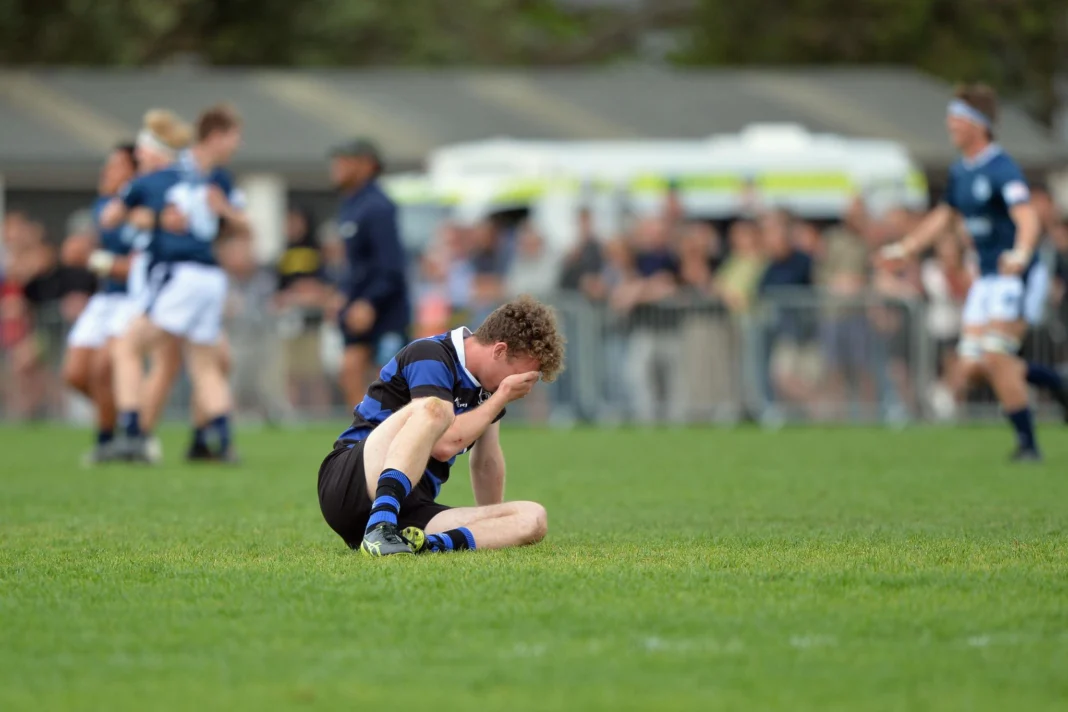
Sport is one of the most powerful tools for developing young people, but mental health experts warn that the pressure to perform that comes with the increasing competitiveness and professionalisation of school sport in South Africa may be creating unintended psychological risks for some young athletes.
10 October is World Mental Health Day and the South African Society of Psychiatrists (SASOP) highlights that while high-performance sport achievements at school level can open education opportunities and careers in elite competition, the schools, coaches and parents involved need to guard the mental resilience of children being exposed to the attention and expectations previously reserved for professional athletes.
Psychiatrist Dr Bonginkosi Mafuze, who heads SASOP’s Sports and Exercise Psychiatry Special Interest Group, said that the growing commercialisation and competitiveness of school sport is placing many young athletes under extraordinary pressure at a time when they are still developing emotionally and psychologically.
“Sport is generally protective for young people. It promotes physical health, social connectedness, discipline, resilience and improved mental wellbeing. The concern is not sport itself. The concern is what happens when winning becomes everything,” says Dr Mafuze.
“Many children are training and competing at increasingly high levels from a young age, driven by pressure from parents or coaches to perform, or to gain access to top schools, with the potential of negatively impacting their mental health.”
Dr Mafuze says across South Africa, elite school sport has become increasingly high stakes.
“First-team selection, provincial representation, scholarships, bursaries and social media exposure can create opportunities for talented youngsters who might not otherwise have had access to them, but the concern is when a young person’s sense of identity and self-worth becomes too closely tied to sporting performance.”
“In many cases, children are not simply playing sport because they enjoy it. They feel responsible for meeting expectations from coaches, schools, parents, teammates and even online audiences. For some, sporting success begins to feel like the measure of their value as a person,” he explains.
While school athletes are often viewed as confident and resilient, research suggests they face unique psychological challenges. “Many are expected to balance demanding training schedules with academic performance, while simultaneously managing concerns about team selection, injuries, future opportunities and social pressures.”
“The athlete who appears successful on the field may be struggling privately with anxiety, burnout, perfectionism or fear of failure. These challenges are often hidden because young athletes become very skilled at pushing through discomfort and maintaining the appearance that everything is under control,” says Dr Mafuze.
“Today’s youth often feel they must excel academically, athletically, socially and online, all at the same time. The pressure to constantly perform has become one of the defining challenges facing many young people.”
When pressure becomes overwhelming, some adolescents may seek unhealthy ways to cope, such as substance abuse.
“Athletes rarely use substances because they want to fail,” says Dr Mafuze. “They often use substances because they want to feel different. Alcohol may be used to switch off after intense stress. Cannabis may be used to manage anxiety. Nicotine and vaping products may be used to cope with pressure. Energy-enhancing substances may be used in an attempt to maintain performance. In these situations, the substance becomes an unhealthy coping strategy.”
“When young people have not developed healthy ways of dealing with disappointment, anxiety, injury, uncertainty or burnout, unhealthy coping mechanisms can become attractive.”
Dr Mafuze advises that clinicians, parents and coaches support young athletes in addressing the underlying reasons for the distress that may lead to unhealthy behaviour, for example an inability to switch off after the “high” of competition, sleeping problems, fitting in to team structures, or the anxiety of meeting performance expectations.
“One of the greatest risks emerges when achievement becomes linked to identity. Children may begin receiving a powerful message, sometimes explicitly, sometimes indirectly, that they are valued when they perform and celebrated when they win.”
“When a young person’s sense of self becomes dependent on achievement, failure can feel catastrophic. Being dropped from a team, missing selection or suffering an injury can become much more than a sporting setback. It can feel like a personal crisis.”
“Over time, chronic performance pressure can contribute to anxiety, emotional exhaustion, burnout and unhealthy coping behaviours.”
He added that psychological support should form part of overall athlete welfare, especially during rehabilitation from injury, as “an injured young athlete may lose training, competition, daily contact with teammates and a major source of identity at the same time”.
“The same principle applies to non-selection, loss of form, transition out of competitive sport and other periods when the young person’s sporting identity is disrupted. ”
Dr Mafuze stresses that the solution is not less sport, but healthier sporting cultures.
“Sport remains one of the best investments we can make in young people. The challenge is ensuring that the environments around sport support wellbeing as much as performance.”
Dr Mafuze warned that it might not always be obvious that a young athlete is under psychological distress, as they are expected to be motivated and “mentally tough” in a sporting world that values discipline, persistence and the ability to push through discomfort to perform.
Warning signals that distress is not just a lack of motivation or resilience, and that the young person may need a mental health conversation include:
- Increasing dread or anxiety around training or competition.
- Heightened distress after an injury or selection setback,
- Persistent irritability or mood changes,
- Deteriorating functioning at school or home,
- Changes in sleeping or eating habits,
- Withdrawal from friends or activities, or loss of enjoyment in regular activities or a previously-loved sport, or
- Excessive training despite illness or injury.
“Mental health support should not be limited to responding once an athlete reaches crisis point. Regular wellbeing conversations and access to appropriate assessment or professional referral when concerns arise can help identify difficulty earlier,” Dr Mafuze said.
He says schools, coaches and parents all have a role to play in creating psychologically healthy sporting environments. This includes:
- Normalising conversations about anxiety, stress and burnout.
- Providing mental health screening and support for young athletes, with clearly signposted, confidential routes to accessing mental health support.
- Offering additional support following injuries, prolonged rehabilitation, non-selection or a decision to move away from competitive sport
- Educating parents about the impact of excessive performance pressure, and the warning signs
- Creating team cultures that value effort, growth and wellbeing, and not only results.
“Young athletes need environments that allow them to make mistakes, learn from setbacks and ask for help without fear of judgement.”
“We often ask whether our young athletes are strong enough to handle the pressure placed on them. Perhaps the better question is whether we are doing enough to help them carry it,” Dr Mafuze said.

