



SUMMER, THE SOUTH AFRICAN WAY
Water, easy living and a home designed for the heat
Summer is water in South Africa. The pool gets used again. Gardens get attention. Kitchens fill with fresh food and people, and a cool shower after a hot afternoon becomes one of the simplest pleasures of the day.
This summer, though, water comes with a little more context.
El Niño is firmly established in the tropical Pacific and is expected to continue into early 2027. For South Africa, this can increase the likelihood of warmer, drier conditions across parts of the summer-rainfall region. Add continuing pressure on municipal water systems and the government’s National Water Action Plan, and the amount of water used at home deserves attention.
Kitchens and bathrooms are also becoming warmer in appearance, more connected to surrounding living spaces and increasingly designed around how people actually use them.
A kitchen built around people
Stephanie Forbes, National Manager of the Kitchen Specialists Association, says kitchens heading into 2026 are becoming warmer, more textured and more closely connected to the rest of the home.
That makes particular sense here.
The South African kitchen often sits close to the patio, braai or outdoor dining area. In summer, people drift between them. Food is prepared while guests are around. The island becomes somewhere to sit with a drink rather than simply somewhere to chop onions.
Current kitchen design reflects some of that. Timber and textured woodgrain are appearing alongside stone. Porcelain is being used across worktops and cladding, while natural stone is showing up in honed and leathered finishes rather than only highly polished surfaces. Softer greens, blues and earthier shades are also appearing in current palettes.
A timber cabinet can sit happily against stone. A darker fitting can sharpen a pale surface. Materials can also help the kitchen feel connected to the garden or patio without copying what is outside.
The bathroom after a 32-degree day
Summer changes the bathroom too.
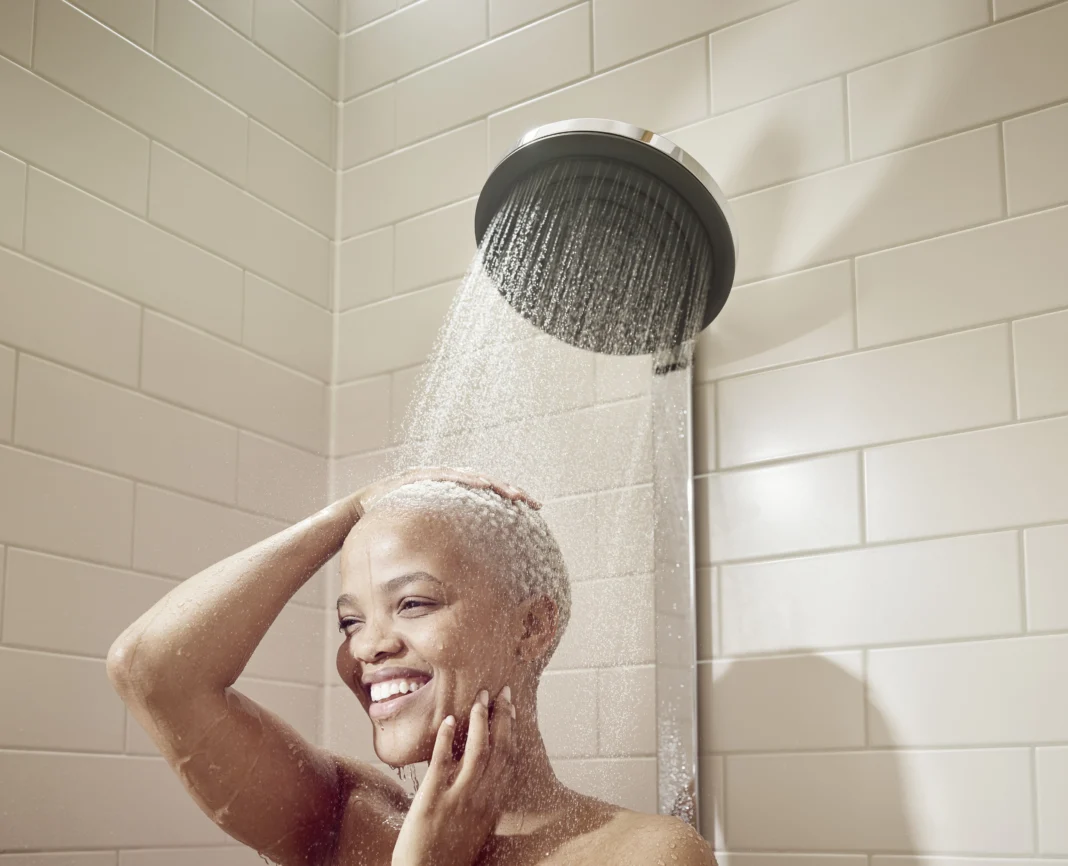
On a hot day, the shower experience is essential. You want good water coverage. You want it to feel refreshing. And, particularly in South Africa, you probably do not want to run 15 litres of water down the drain every minute to achieve it.
This is where hansgrohe Pulsify becomes interesting.
Its PowderRain spray breaks the water into very fine droplets. EcoSmart versions use around eight litres per minute, while EcoSmart+ versions reduce that to six litres. For someone coming in after gardening, exercise, or an afternoon beside the pool, that kind of technology makes sense because it addresses a real daily habit.
Rainfinity brings a different character to the shower. The range includes overhead, hand and shoulder showers, and PowderRain remains central to the experience. Matt White, Matt Black and Brushed Bronze also allow the fittings to sit comfortably within the warmer stone, timber and earth-toned bathrooms currently appearing in design coverage.
A well-designed bathroom can conserve water while still feeling good to use.
Water use happens at the basin too
The shower tends to dominate the water conversation, but think about how often the basin mixer is turned on in a day.
Hands. Teeth. Faces. Shaving. A quick rinse. Then again, a few minutes later.
The Vernis collection includes EcoSmart basin mixers limited to five litres per minute. AirPower introduces air into the water stream, creating a fuller, softer flow and helping to reduce splash around the basin.
Tecturis offers another option. Tecturis S has a rounded form, while Tecturis E is more angular. Selected EcoSmart+ models use four litres per minute at three bar.
Some models also include CoolStart. With the lever centred, the mixer supplies cold water. Hot water is only called for when the lever is intentionally moved towards the hot setting. Consider how often people open a mixer in the centre position for a few seconds without actually needing warm water.
These are small interventions, but that is partly the point. Most household water use does not happen through one dramatic decision. It happens through repeated habits.
And that may be the more useful design lesson for the South African summer. Sustainability does not need to become the visual theme of the house. It works better when it is built quietly into the way the house functions.
A South African summer home can still be generous, sociable and centred around water. It simply makes sense to use it more smartly.
hansgrohe. Life is waterful.

