



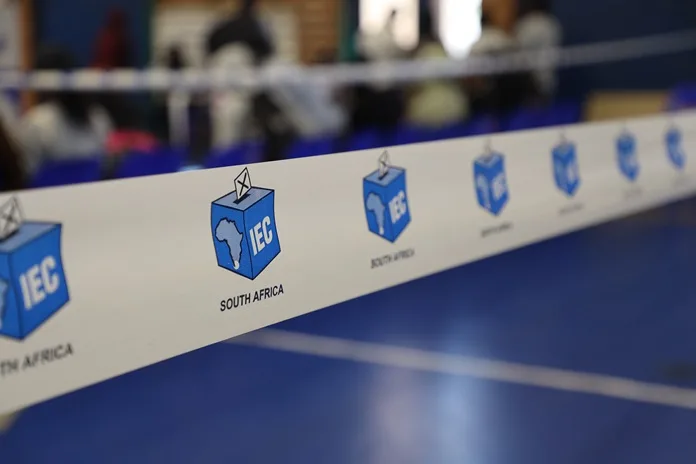
JOHANNESBURG, Gauteng — The Electoral Commission of South Africa has confirmed that 546 out of 732 registered political parties will contest the upcoming 2026 local elections in November. This marks a significant surge in political fragmentation, with 142,072 candidates nominated to compete for 10,526 council seats nationwide—a 43% jump from the 325 parties that participated in the 2021 municipal elections.
As the country prepares for a historically crowded ballot, governance expert Prof. Mazwe Majola and Groundwork Collective founder and CEO Mbali Ntuli have provided critical insights into what this landscape means for South African democracy, municipal stability, and voter accountability.
Prof. Majola noted the dual nature of this political surge. While it offers greater democratic choice and representation, it also risks voter confusion and governance instability. “When there are so many political parties, this will lead to hung councils,” Prof. Majola explained, pointing out that small parties often become kingmakers, wielding influence far exceeding their actual vote share. With 66 hung councils recorded in 2021, current predictions suggest that six of the eight major metros could face similar coalition-dependent outcomes in 2026. Johannesburg alone is expected to feature around 80 parties on a single proportional representation (PR) ballot.
Mbali Ntuli framed this development as a positive sign of a maturing democracy. She argued that hyper-local parties are often more deeply invested in community-specific issues rather than national policy maneuvering. “Voters have clearly said that they don’t believe in any one political party always having the majority,” Ntuli stated. She emphasized that citizens are actively exercising their democratic rights to find leadership that works for them, even if it means navigating more complex political entrants and coalition landscapes.
The discussion also tackled recent moves by the ANC to raise the candidate vetting bar to an NQF Level 7 qualification. While intended to ensure municipal competence, Ntuli warned against making local governance elitist. She stressed that while basic competency—such as the ability to read a multi-billion rand municipal budget—is essential, constitutional rights under Section 19 must be protected. “The ultimate qualification comes from the voters,” she noted, cautioning that formal education does not automatically guarantee integrity, accountability, or effective leadership.
Prof. Majola agreed, highlighting the necessary synergy between elected officials (mayors, speakers, and councilors) and appointed administrative leaders (city managers, CFOs, and engineers). He cautioned against reducing leadership to mere academic credentials, noting that many respected community leaders possess “organic wisdom” and genuine grassroots legitimacy, even if they lack formal degrees or English fluency.
Addressing gender dynamics, Prof. Majola expressed deep disappointment over electoral data showing only 38% of women appointed to PR lists and 35% contesting directly. He called for intentional, aggressive efforts from political organizations to rectify this imbalance, especially given that women outnumber men in the country’s overall population.
Looking beyond the ballot, both experts emphasized that the responsibility for effective local governance does not rest solely on politicians. Ntuli urged citizens to move beyond election-day voting and actively participate in Integrated Development Plan (IDP) meetings, ward forums, and council oversight. “We have bad politicians that don’t know their jobs, and we have citizens that don’t know their jobs, so they can’t hold them accountable,” Ntuli said. She advocated for publicly accessible competency models from institutions like SALGA and robust civic education starting at the school level.
When asked to name the two most critical qualities for local government leaders, Prof. Majola pointed to “incorruptible integrity” and a genuine “love for the people.” As South Africa braces for a highly fragmented electoral landscape this November, the consensus remains clear: a healthy, functional democracy requires both competent, ethical representatives and an actively engaged, informed citizenry.

