



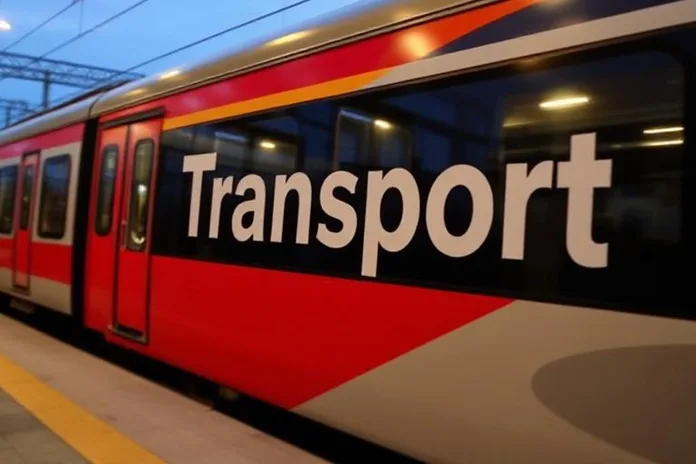
In a significant move to rehabilitate South Africa’s transport system, Transport Minister Barbara Creecy has announced the government is actively assessing the next step to open the country’s rail network to private investors.
The initiative, outlined by the minister during a media briefing, focuses on soliciting private sector participation in passenger rail as a catalyst for economic growth and infrastructure recovery. A key component of this plan is the issuance of a Request for Information (RFI) to gather public and industry views to guide the process.
Minister Creecy was quick to allay fears of a full-scale privatization, stating, “We’re not going to privatize the rail network.” She emphasized the state’s intention to retain ownership of the network and ports to ensure interoperability, maintenance standards, and economic transformation. The current model under consideration involves concession systems or build-operate-transfer mechanisms where assets would revert to the state after a contract period.
The RFI seeks “innovative ideas and solutions” from the private sector for several key areas. These include the development of regional rapid rail systems, a new tap-and-go ticketing system, and the modernization and management of major depots like Braamfontein and Wolmerton.
Additionally, the government is inviting interest in leasing the new blue trains and older yellow fleet, as well as proposals for the long-term future of the Gibela manufacturing plant, designated as the African rail manufacturing hub by the African Union in 2015. The ministry is also looking for partners to commercialize hundreds of kilometers of fibre optic cable being rolled out alongside the rail network to generate additional revenue for the Passenger Rail Agency of South Africa (PRASA).
On the freight side, the minister provided an update, revealing that a similar RFI launched in March received over 163 responses, with more than 50 coming from 12 international countries. Transnet is now preparing to issue the first formal Request for Proposals (RFP) before the end of the year.
Expert Analysis Highlights Opportunities and Concerns
The announcement was met with analysis from Gundo Maswime, a lecturer in Civil Engineering at the University of Cape Town and a public policy specialist. Maswime affirmed the necessity of private involvement, noting that railway concessions for passenger and freight services “have been more successful all over the world when there has been private sector participation.”
He pointed to the success of the privately-managed Outeniqua Pass to Millers Point route as a tested model within South Africa. However, he raised critical concerns about the implementation.
A primary issue, according to Maswime, is the apparent lack of South African companies among the interested parties. “The big question is why are there no South African companies that can do such things?” he asked, pointing out that the skills from the previously well-run rail network should still exist within the country. He warned that without stringent regulatory stipulations, a significant portion of the profits from these concessions could leave the country.
Maswime also addressed the root causes of the rail network’s decline, linking it directly to a pattern of leadership instability. He noted that the performance of both PRASA and Transnet freight rail saw drastic declines after their CEOs were removed amid corruption allegations in the 2013-2014 period, plummeting to pre-1994 levels.
“When criminals see that you have completely neglected something, they don’t see [a reason] not to damage it,” Maswime stated, connecting the rampant theft of infrastructure, like the 2022 report finding 2,000 km of cable stolen, to a visible lack of maintenance and security.
While supportive of the move, Maswime urged strong government regulation to prevent monopolies, ensure accountability, and mandate the reinvestment of profits into the local economy. The government’s RFI process will be crucial in shaping these regulatory frameworks as it moves to formally engage private partners.

