



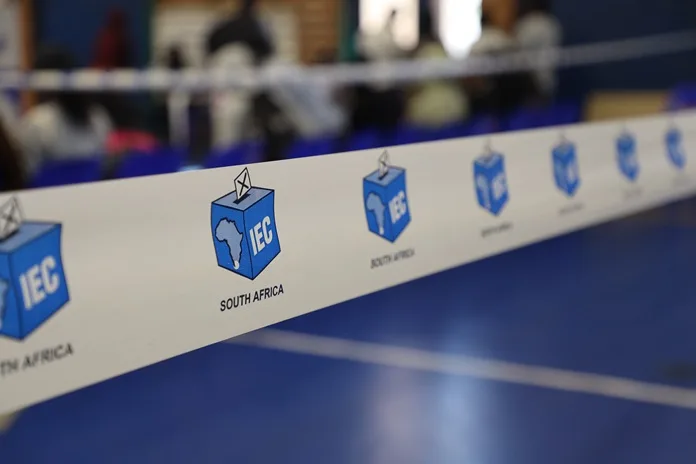
South Africa — The Independent Electoral Commission (IEC) has launched its nationwide Voter Registration Weekend, marking the first of several targeted drives ahead of the November local government elections. The initiative aims to update the voter’s roll and assess public engagement, though officials caution against using registration numbers as a direct barometer for democratic confidence.
An IEC spokesperson stated that the timing of the drive is strategic rather than premature. With the November elections confirmed, the heavily administered process of preparing the voter’s roll requires timely execution to onboard South Africans and prospective voters.
The current voter’s roll stands at approximately 28 million, with natural attrition removing about 34,000 names monthly due to mortality. Addressing concerns about attrition outpacing new registrations, the spokesperson emphasized that the commission’s primary mandate is facilitating the integrity of the common voter’s roll, a fundamental value enshrined in the Constitution. The spokesperson noted that the IEC should remain satisfied as long as it successfully encourages and educates the public, regardless of short-term numerical fluctuations.
When asked if weekend registration turnout serves as a proxy for public confidence in democracy, the IEC representative dismissed the premise. Voter registration is a continuous process, and this weekend is merely a targeted push to open voting stations. Citizens can register at any time until the elections are officially proclaimed. The spokesperson added that some eligible voters may delay registration due to uncertainty about their November residence or pending identity document processing by the Department of Home Affairs.
Addressing the historical trend of lower turnout in local government elections compared to national polls, the spokesperson stated that registration itself is rarely the primary hurdle. South Africa typically maintains a sufficiently large registered base, including first-time registrants. The real challenge lies in the persuasion phase—convincing registered individuals to actually cast their ballots. Voter responses are expected to vary across different wards, and the registration window remains open for improvements before the deadline.
The IEC’s recent student campaign successfully reached nearly 270,000 young people, with 59% being first-time registrants. However, the spokesperson highlighted that youth registration does not automatically translate to youth turnout, noting that many South Africans register at 16 but only vote at 18.
Ultimately, the spokesperson stressed that actual voter turnout depends on factors that emerge closer to the election date. These include the availability of candidates, the quality of election manifestos, the specific promises made to voters, and the logistics required to reach voting stations. The spokesperson warned that political disillusionment often arises when parties undermine pro-voting messages during the formal campaign period. Therefore, assessing public sentiment and anticipated turnout should wait until the actual campaign reveals the parties’ platforms.

