



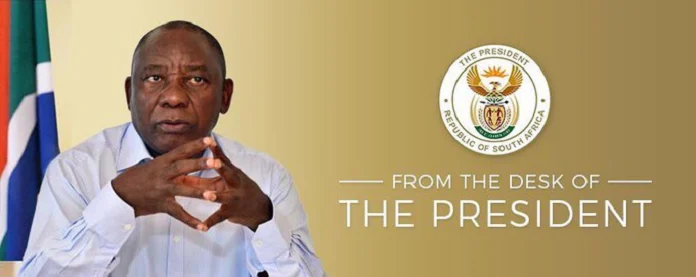
SOUTH AFRICA — As the nation prepares to head to the polls, President Cyril Ramaphosa is strongly urging registered citizens to participate in the South Africa Local Government Elections this Wednesday. Speaking in his weekly national newsletter, the President emphasized that casting a ballot is a vital step toward building safer, cleaner, and more prosperous communities, urging voters to prioritize progress and development.
Unprecedented Scale and Democratic Maturity
The upcoming South Africa Local Government Elections represent one of the largest democratic exercises in the country’s history. Ramaphosa noted that 546 political parties and nearly 137,000 candidates are contesting the elections scheduled for Wednesday, 4 November.
He contrasted this vibrant political landscape with the narrowing political spaces seen in many parts of the world, highlighting South Africa’s evolving and maturing democracy. The President specifically praised the robust participation of women and the growing proliferation of independent candidates. Furthermore, he reaffirmed the public’s high trust in the Electoral Commission of South Africa (IEC), celebrating the nation’s unbroken track record of free and fair elections since 1994.
Security and Peaceful Voting
Addressing concerns over electoral integrity, the President called on all political parties, candidates, and citizens to ensure the elections are not marred by violence or intimidation. He confirmed that the South African Police Service (SAPS) is fully prepared to secure Voting Day. Following extensive risk assessments, operational planning, and simulation exercises, law enforcement is positioned to ensure a peaceful and safe electoral process.
Municipal Reforms and the Revised White Paper
The newly elected leadership across the country’s eight metropolitan, 44 district, and 205 local municipalities will step into a system undergoing a major reset. Ramaphosa highlighted the Revised White Paper on Local Government, which was officially launched last month. The framework introduces sweeping reforms designed to boost efficiency, accountability, and the overall ability of municipalities to fulfill their mandates.
A core pillar of these reforms is placing municipalities on a sustainable financial footing through improved financial management, better revenue collection, and tighter spending. The President announced a critical development: revenues generated from electricity and water sales will be strictly ring-fenced to reinvest in the maintenance of critical infrastructure, ensuring services are brought back up to standard.
Additionally, the reforms introduce compulsory licensing for water and electricity providers to enforce minimum competence standards. To further professionalize the sector, administrative appointments will be strictly based on qualifications and merit. If a municipality is unable to execute specific responsibilities, those duties will be transferred to a more capable sphere of government or entity.
Combating Corruption and Violence
Ramaphosa did not shy away from addressing the severe challenges plaguing local government. He warned that systemic weaknesses have fostered corruption and patronage, including illicit collusion between municipal officials and businesspeople to secure fraudulent tenders for substandard or undelivered services. He expressed deep concern over councillors being “bought” by business interests, prioritizing procurement over the actual needs of the people.
The President also condemned the violence tied to local power struggles and resource contestations, which has led to disrupted council meetings and the tragic killings of ward candidates, councillors, and municipal officials. Describing these issues as transactional betrayals of democracy, he stressed that citizens hold the power to reverse declining public trust. By electing capable leaders, Ramaphosa concluded, an active citizenry can ensure local government fulfills the developmental promises of the Constitution.

