



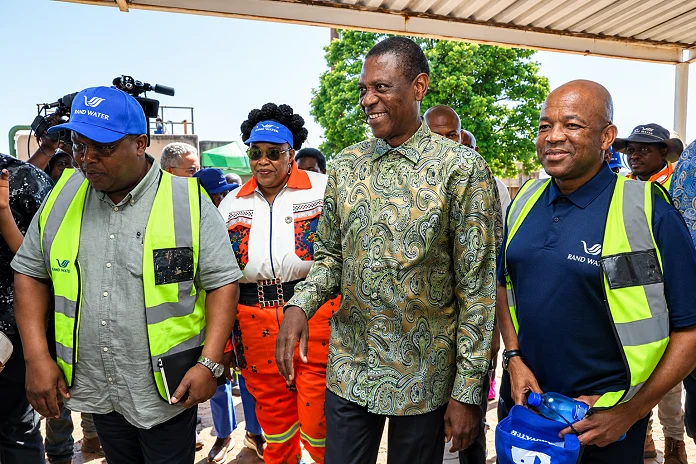
BRONKHORSTSPRUIT — The ongoing Bronkhorstspruit water crisis has escalated significantly, with gastrointestinal illness cases linked to the compromised municipal supply rising sharply to 833. During a strategic visit by the Inter-Ministerial Committee (IMC) on Water and Sanitation, Minister of Water and Sanitation Pemmy Majodina and Deputy President Paul Mashatile addressed the escalating health concerns and outlined the government’s immediate remediation strategy for the City of Tshwane Metropolitan Municipality.
Surge in Illness Cases Explained
Minister Majodina disclosed the revised health figures, noting a steep increase from the previously reported 408 cases. She clarified that the spike is largely a residual effect of the contamination timeline rather than an ongoing active spread.
“As you know, we have shut down the water treatment works. However, when a plant is shut down, some water may already have been processed and distributed. We believe this may have contributed to the number of cases,” Majodina explained. She added that a secondary factor was residents continuing to consume water they had previously stored in containers, even after the plant was closed and water tankers were deployed.
Despite the rising case numbers, health officials have confirmed that no critical cases or fatalities have been reported.
Infrastructure Repairs and Rand Water Intervention
To address the root cause of the contamination, four new water pumps have been successfully installed at the Bronkhorstspruit Water Treatment Plant. The government has adopted a phased approach to rehabilitation.
“We are working to restore Phase 1 at the plant. The plant has two phases, and we will not rehabilitate the entire facility at once,” Majodina stated. She confirmed that Rand Water has been instructed to prioritize Phase 1 to guarantee that any water supplied upon the resumption of operations is completely safe.
Deputy President Paul Mashatile confirmed that Rand Water is currently leading a multidisciplinary team intervening at the facility on behalf of the national department, in direct collaboration with the municipality. The plant remains shut down to facilitate comprehensive repairs and deep cleaning.
“Rand Water will take a few weeks to resolve the problem. We cannot give a specific timeframe, but work has already begun,” Mashatile said, emphasizing that alternative water sources have been secured for residents in the interim. He stressed that the government must intensify efforts to prevent any further outbreaks of diarrhoea and gastrointestinal illness.
Emergency Water Supplies and Chlorine Stocks
To mitigate the immediate impact on residents, the City of Tshwane is distributing free drinking water via tankers. However, Minister Majodina cautioned that this is strictly a temporary emergency measure.
“I have always said they should be used for emergencies, and this is one such emergency. Where possible, reliance on tankers should not extend beyond two or three months. It is costly for municipalities and inconvenient for residents, who must find out where the tankers are located,” she noted.
Addressing public concerns regarding the chemical treatment of the water, Majodina assured the community that the Bronkhorstspruit treatment plant holds sufficient chlorine stocks to last for the next six to seven weeks. Rand Water and the Tshwane municipality are already coordinating to procure additional supplies before current reserves are depleted.
Furthermore, the Minister clarified that there is currently no established link between the water supply challenges in Bronkhorstspruit and the ongoing issues in Hammanskraal.
National Water Infrastructure Audit and Funding
The crisis in Bronkhorstspruit has highlighted broader challenges within the country’s aging water infrastructure. Minister Majodina revealed that the government is currently conducting a comprehensive audit of water treatment works to assess their operational conditions, with a specific focus on Gauteng due to its dense population and localized supply unreliability.
“Without an audit, we cannot properly assess the condition of these facilities,” she said.
Highlighting the scale of the national challenge, Majodina estimated that at least R400 billion is required to fully repair the country’s water systems. To bridge this gap, the national department is actively calling on the private sector to partner with municipalities, noting that many local authorities lack the necessary technological capacity.
“We also want to ensure that municipalities, particularly in Gauteng, allocate a portion of their resources to maintaining infrastructure. Infrastructure that is not maintained will eventually fail and cause problems,” Majodina concluded, urging a proactive shift from emergency responses to sustained infrastructural maintenance.

