



JOHANNESBURG, GAUTENG — As the nation braces for the South Africa Local Government Elections 2026, the critical state of municipal service delivery and local governance has once again taken center stage in the national discourse. Communities across the country are demanding reliable basic services, responsive leadership, and meaningful economic opportunities. However, grassroots activists warn that dilapidated infrastructure, corruption, and political apathy continue to undermine the livelihoods of the most vulnerable citizens.
Infrastructure Decay and Corruption in Buffalo City
Bohlale Buzani, a community activist from Mdantsane in the Eastern Cape under the Buffalo City Municipality, highlighted severe infrastructural decay facing his community. He pointed to the deteriorating roads stretching from King Phalo Airport down to Azalea in King William’s Town.
Beyond infrastructure, Buzani noted that residents are burdened with the highest electricity tariffs in the country, paying 200 rand for merely 30 units. He also exposed deep-rooted financial mismanagement, citing instances where the National Treasury reclaimed funds from the municipality and the Standing Committee on Public Accounts (SCOPA) addressed irregular expenditures.
Buzani emphasized that basic refuse removal and job placements are often distributed based on political connections rather than need. He noted that small businesses are excluded from the local economy unless they are connected to the right political figures, leaving qualified 22-year-old graduates to take menial jobs, such as sweeping municipal floors, just to secure a breakthrough opportunity.
Sanitation Crises and Political Complacency in Alexandra
In Alexandra Township, north of Johannesburg, the challenges closely mirror those in the Eastern Cape. Advice Chuma, a local activist, noted that despite a past visit by the President to the area, little has changed on the ground.
Chuma highlighted a severe sanitation crisis, pointing out that bucket toilets are still in use over 30 years into democracy. He linked this lack of privacy and poor maintenance directly to gender-based violence (GBV) and the abuse of women, noting that clustered, unemptied bucket toilets strip residents of their basic dignity. Additionally, Chuma criticized the rampant crime and the failure of private contractors to collect trash, leaving the township in filth.
He noted that because a single political party controls all wards in Alexandra, there is a lack of political competition, leading to systemic complacency. “Residents are top of mind to say we need to vote differently,” Chuma stated, comparing the community’s ongoing situation to an abusive relationship.
Informal Settlements: “Banks for Votes” and Tenderpreneurism
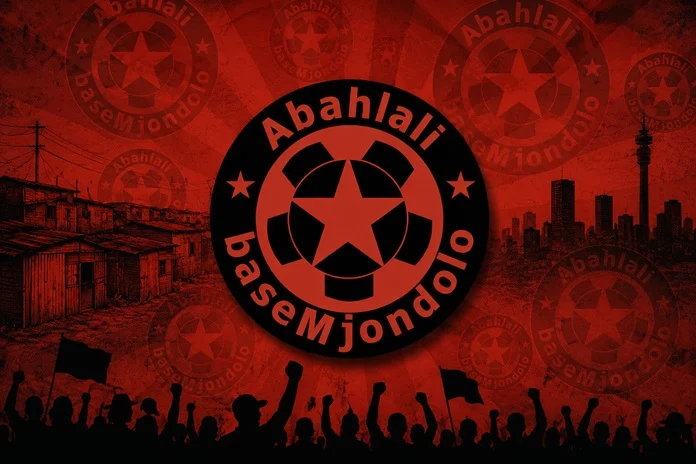
Thapelo Mohapi from Abahlali baseMjondolo echoed these sentiments, arguing that the poor and marginalized in informal settlements are treated merely as “banks for votes” and are only remembered when elections approach.
Mohapi recounted tragic incidents, such as a pregnant 20-year-old who was burned alive in a shack fire in Kennedy Road, and residents who have been waiting for housing since 1996. He also exposed the “tenderpreneur” system, alleging that politicians intentionally keep water infrastructure broken to secure lucrative water tanker tenders, leaving communities without access to basic water and sanitation. Furthermore, Mohapi highlighted partisan service delivery, alleging that municipalities sometimes withhold services from wards represented by opposition counselors to make them appear unfit.
Following a recent gathering of over a thousand members, where the movement also launched a book from the Palestinian revolution, Mohapi announced that the community is drafting its own manifesto. They refuse to vote for parties that offer empty promises. He also described horrific sanitation conditions in mobile toilets, where children are exposed to severe health hazards, including eating worms due to the lack of proper cleaning.
Protests Against Gender-Based Violence
Addressing the broader crisis of gender-based violence, Mohapi announced an upcoming protest scheduled for 10:00 AM outside the Park Police station. The demonstration will demand an equal distribution of protection resources and a functional justice system for working-class black women in townships and informal settlements. The activists specifically referenced recent killings of vulnerable women in Kemp Park and in Thembisa, demanding that the lives of the poor be recognized and protected equally alongside the elites.
As the election date approaches, the consensus among community leaders is clear: voters are exhausted by empty promises. The prevailing demand is for tangible action, accountability, and a definitive break from the political status quo that has failed to deliver basic human dignity.

