



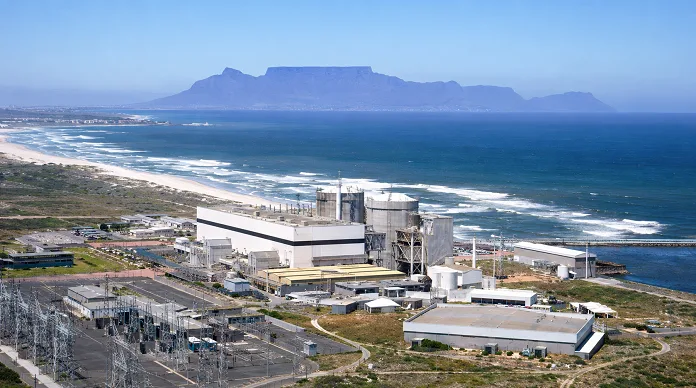
WESTERN CAPE — Eskom has officially confirmed that there was no radiation leak at the Koeberg Unit 2 facility during recent routine maintenance, ensuring that employees, the environment, and surrounding communities faced absolutely no risk. The state-owned utility emphasized that all safety protocols functioned precisely as intended during the scheduled inspections.
According to a statement released on Sunday, the utility classified the July incident as a Level 0 event on the International Nuclear and Radiological Event Scale (INES), denoting no safety significance. Eskom explicitly stated that plant operations, nuclear safety, and public welfare remained entirely unaffected, and confirmed that the National Nuclear Regulator (NNR) was promptly notified in full compliance with statutory regulatory frameworks.
The incident took place while Unit 2 was undergoing a scheduled maintenance outage that began in April 2026. Eskom confirmed that the outage remains on track for a November return to service. Concurrently, Koeberg’s Unit 1 continues its standard, uninterrupted operations.
On 2 and 7 July, highly sensitive radiation monitoring systems registered two brief, localized spikes in airborne radioactivity. These detections were isolated strictly within a controlled work zone inside the Unit 2 containment building. Eskom clarified that the activity was triggered during Eddy Current Testing (ECT), a globally standard, non-destructive evaluation technique utilized to examine steam generator tubes. The process involves robotic probes designed to detect early signs of wall thinning and establish a performance baseline. During this procedure, a microscopic amount of oxide particles—colloquially termed “crud” within the nuclear sector—became temporarily airborne within the sealed workspace.
The utility highlighted that such minor particulate events are a known and anticipated occurrence during steam generator inspections at pressurized water reactors worldwide. Koeberg’s defence-in-depth safety architecture responded flawlessly. Upon detection, Constant Air Monitors (CAMs) automatically triggered an alarm. Plant personnel immediately suspended the inspection, secured the zone, and relied on high-efficiency particulate air (HEPA) filtration systems operating under negative pressure to clear the airborne particles. Following mandatory radiological assessments, maintenance safely resumed.
Eskom stressed that the facility’s physical containment barriers successfully prevented any radioactive material from breaching the plant’s protective boundaries, eliminating any need for employee iodine tablet administration. Monitoring data verified that conditions were swiftly restored to normal operating parameters.
The utility noted that this transient event had zero effect on the overall safety of the power station, the ongoing maintenance schedule, or the targeted completion date for the Unit 2 outage. All involved staff received a thorough safety debriefing. Eskom concluded by reaffirming its unwavering dedication to transparency, strict regulatory compliance, and the highest echelons of nuclear safety at South Africa’s sole nuclear power generation facility.

