



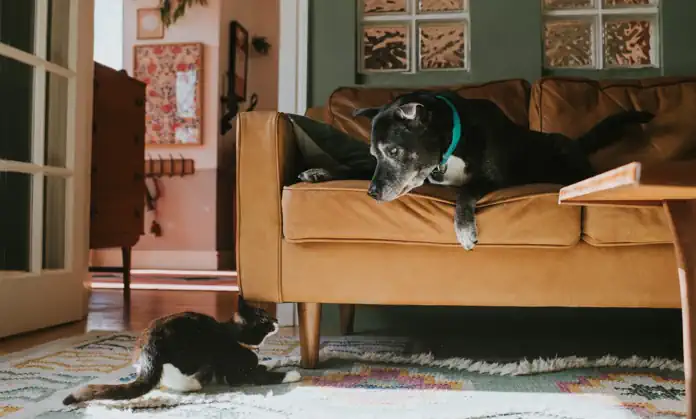
Osteoarthritis is a common cause of pain in dogs and cats but it’s easy to miss if you don’t know what to look for. This Animal Pain Awareness Month, global animal health company, Zoetis South Africa, shows you how to spot the signs and get your pet the pain relief it needs.
Johannesburg, 9 September 2026: Tom was 12 years old when he suddenly struggled to support his weight. The Africanis rescue dog was climbing off a couch he had hopped on and off for years when, suddenly, his hind legs gave way, seemingly unable to hold his weight. His owners rushed him to the veterinarian, fearing the worst. The diagnosis: pain caused by osteoarthritis. To the relief of Tom’s owners, it could be managed.
Not just old age
“Many pets live with osteoarthritis (OA), and the signs are often mistaken for ‘just getting older,’” says Dr Tarryn Dent, veterinarian and Business Unit Director: Companion Animals at Zoetis South Africa. “Even the most caring, attentive pet owners often miss them.”
This was the case with Tom. His owners recalled how one of his hind legs would sometimes tremble slightly after a bout of zoomies. Since he was still active, it didn’t seem to bother him and it always went away on its own, they had put it down to old age. It had actually been a sign of osteoarthritis pain.
What is osteoarthritis?
“Osteoarthritis is a common, chronic joint condition where the joint changes over time, which can lead to inflammation, stiffness, reduced mobility and ongoing pain,” explains Dr Dent. In dogs, this may look like limping or difficulty getting up, while in cats it’s often more subtle, such as jumping less, grooming less, sleeping more, or hiding.
Osteoarthritis is a common cause of chronic pain in dogs and it isn’t limited to “very old” dogs. Osteoarthritis in cats is common but often under-recognised. In some studies, around 40% of cats showed signs consistent with OA pain, and imaging studies indicate up to 90% of cats over 12 years may have radiographic evidence consistent with osteoarthritis, yet many won’t show an obvious limp.
How do dogs get osteoarthritis?
“There are various factors that can contribute to a dog’s developing osteoarthritis,” says Dr Dent. “Joint wear from aging is one factor, but there are also other risk factors, such as previous injury, structural joint issues and body weight, with heavier dogs being more susceptible.”
Dogs can mask pain so it may not be obvious that your dog has osteoarthritis. Some signs to look out for include:
- Difficulty getting up (especially after rest)
- Stiffness after exercise or first thing in the morning
- Limping/lameness
- Tiring more easily than usual
- Reluctance to play, run, climb stairs, or jump
- Changes in posture or the way your dog sits/stands
- Behaviour changes that may signal pain (e.g., irritability, restlessness, reduced interaction)
- Trembling/shaking (especially when moving or being handled)
Osteoarthritis in cats
While osteoarthritis is common in cats, it can go unnoticed because cats are so adept at hiding pain. “Pet owners may look for obvious signs like a limp, but the signs are often more subtle,” says Dr Dent.
If a cat is jumping less, grooming less, sleeping more than usual or hiding more often, consider booking an osteoarthritis assessment with your veterinarian.
Other common signs of osteoarthritis in cats include:
- Jumping less (avoiding high surfaces)
- Using stairs less, or taking longer routes to get up/down
- Moving more slowly than normal
- Stiffness when first getting up
- Sleeping more than usual, hiding more often, or seeming withdrawn
- Grooming less overall, or over‑grooming/licking around painful areas
- Reluctance to play
- Mood changes (e.g., more irritable or less tolerant of handling)
- Litter box changes (difficulty getting in/out, accidents if the box is hard to access)
What to do if you think your pet has osteoarthritis
“If you’re worried your pet might have osteoarthritis, the best course of action is to book an osteoarthritis assessment with your veterinarian,” says Dr Dent.
“Leading up to the appointment, track any changes in your pet’s behaviour for a week. If possible, take a short video of your pet that you can show the veterinarian at your appointment because your pet may not display the concerning behaviour during a consultation.”
If it turns out your pet has been struggling for some time, as was the case with Tom, try not to feel guilty for not noticing it earlier. “Pet owners often blame themselves for not picking up osteoarthritis,” says Dr Dent. “The reality is, it’s not easy to spot, especially in the early stages.”
Managing osteoarthritis in dogs and cats
While osteoarthritis can’t be cured, it can be managed. A holistic management plan can help support joint health and mobility and may help slow the progression of osteoarthritis, allowing your pet to live a more comfortable life.
“Pain control is the anchor that helps pets stay comfortable enough to move, maintain a healthy weight, and enjoy daily life,” says Dr Dent.
Depending on your pet’s needs and circumstances, other interventions in the plan may include weight management if your pet is overweight, movement or rehab therapy, and home adjustments, such as using ramps to help your pet onto couches or high steps, creating non-slip surfaces, and giving cats easier litter access.
However, while these lifestyle interventions can help remove strain, it’s important to understand that they play a supporting role to the pain management regimen prescribed by your veterinarian; they are not a replacement.
Your pet doesn’t have to live in pain. Speak to your veterinarian about a pain management strategy that works for your pet, your lifestyle and your budget.
ABOUT ZOETIS:
A leading multi-national animal health company, Zoetis builds on more than 65 years of experience in animal health to research, develop, manufacture and commercialise medicines, vaccines and diagnostic products. Zoetis understands the deep connection between people and their pet and provides veterinarians with the resources needed to provide the highest quality of care and support, help improve the quality and extend the life of cats, dogs and horses and make it easier for owners to contribute towards the health and wellness of their companion animals. Zoetis produces vaccines, anti-infectives, parasiticides, dermatology products, animal health diagnostic and other pharmaceuticals.
PRESS CONTACT:
Mantis Communications
Kerry Simpson
Tel: 079 438 3252
Email: [email protected]

